

Design thinking books give you practical ways to understand people’s needs, shape ideas, and tackle everyday challenges with more creativity. Without a clear process, teams can jump to solutions too soon, while online advice often feels scattered and hard to apply to a real project.
A thoughtful design thinking book can turn those ideas into a usable routine. It guides you through observing users, defining a need, brainstorming possibilities, and testing rough prototypes, so you can learn what works before investing time in a polished answer.
Many books also offer case studies, prompts, and workshop exercises that help you bring concepts into meetings or personal projects. Clear examples make collaboration easier, while repeatable activities help you move from discussion to practical next steps.
Books differ in tone, depth, and focus, from quick introductions to detailed guides for teams and facilitators. Explore the best design thinking books below to find a useful starting point for your goals.
7 Best Design Thinking Books Reviews

1.Wiley Design Thinking Toolbox Methods Guide
Popular innovation methods help you master practical design thinking
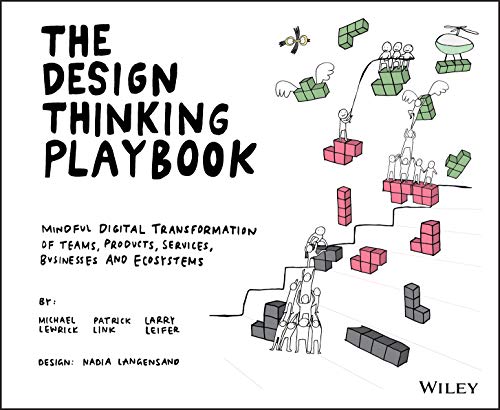
2.Wiley Design Thinking Playbook for Teams
Mindful digital transformation helps teams shape products and services

3.Majosta Design Thinking Beginner Guide
A beginner-friendly guide introduces human-centered innovation methods

4.Independently Published UX Design Thinking
Five steps help beginners create digital experiences that engage users

5.Wiley Design Thinking for Humanity Tools
Practical tools and methods help build resilience for a better future

6.Wiley Design Thinking and Innovation Metrics
Tools help manage creativity, OKRs, products and business success
7.Bloomsbury Design Thinking for Designers
Understand how designers think and work to apply design methods
1. Wiley Design Thinking Toolbox Methods Guide
The Design Thinking Toolbox helps readers explore innovation methods through a book focused on design thinking. Its title frames the subject around methods used in this field, making it a choice for readers who want a guide to design thinking.
The book belongs to the Design Thinking Series, which gives it a clear place among books on the topic. Readers comparing design thinking books can use its title to identify its focus on methods and innovation.
At about 1.7 pounds, it has some heft compared with a slim paperback. That weight may matter if you plan to carry it between home, work and class, though it can also sit on a desk or shelf for reference.
The book measures about 9.4 inches tall and 7.4 inches wide. Those dimensions give it a moderate footprint for reading at a desk or keeping with other books, while the listing does not state its page count or binding type.
Wiley is the listed brand, and the title presents the book as a guide to mastering popular and valuable innovation methods. The available details do not specify which methods it covers, so readers who want particular techniques may want to check the contents before buying.
This book suits readers looking for a design thinking title centered on innovation methods, especially those building a small reference shelf on the subject. Its listed size and weight also make it a reasonable fit for desk reading rather than a lightweight carry-along.
- Focuses on design thinking innovation methods
- Covers popular methods, according to its title
- Moderate size suits desk or shelf reference
- Weighs about 1.7 pounds for carrying
2. Wiley Design Thinking Playbook for Teams
For readers exploring how design thinking can guide digital change, The Design Thinking Playbook focuses on teams, products, services, businesses and ecosystems. Its title frames the book around mindful digital transformation, making it relevant to readers interested in applying design thinking beyond individual products.
The book’s scope connects several parts of an organization. Readers can consider how design thinking relates to teams and services as well as products, businesses and wider ecosystems.
That broad focus may suit people comparing design thinking books for organizational or business topics. The title also signals a specific emphasis on digital transformation, rather than design thinking alone.
The illustrated format gives the book a visual presentation. Its listed weight is about 2.3 pounds, a consideration for readers who plan to carry it between home, work or study.
The book measures about 9.3 inches tall, so it has a standard book format for reading or keeping on a shelf. The available product details do not list a page count or describe specific exercises, so buyers may want to check those details before choosing it.
This book suits readers who want to explore design thinking in the context of digital transformation across teams and organizations.
- Covers teams, products, services and businesses
- Focuses on mindful digital transformation
- Illustrated format supports visual reading
- No major cons
3. Majosta Design Thinking Beginner Guide
Majosta’s design thinking book presents itself as a beginner-friendly guide to human-centered innovation. The title points to readers who want an entry into the subject, with an emphasis on putting people at the center of innovation.
The book’s focus on human-centered innovation makes its topic clear from the outset. Readers considering a design thinking book can use that focus to decide whether they want an introduction centered on people and innovation.
Its title also describes the guide as suitable for beginners. That framing may help readers new to design thinking find a starting point, rather than choosing a book aimed specifically at experienced practitioners.
The available product details do not describe particular methods, exercises, case studies or chapter topics. Buyers looking for those specifics will need more information before they can tell how the book approaches the subject.
The listing gives the physical format as 9 inches tall and 6 inches deep, with a stated width of 0.26 inches. That slim profile may be useful to consider when comparing book formats or planning shelf space.
Overall, the title and description make this a potential choice for new readers interested in human-centered innovation. It suits buyers seeking a beginner-oriented design thinking book, though the listing provides little detail about the guidance inside.
- Beginner-friendly focus suits new readers
- Centers the topic on human-centered innovation
- No details on methods or chapter content
4. Independently Published UX Design Thinking
UX beginners get a five-step introduction to design thinking in this book, with guidance on creating digital experiences. It covers UX design, UI design and user research, giving readers three connected areas to explore as they start learning the field.
The title’s focus on five steps offers a defined path through the subject rather than a broad survey of design. Readers can use that structure to follow the book’s approach to creating digital experiences and begin building knowledge for a UX career.
User research gets specific attention alongside interface and experience design. That makes the book relevant to readers who want to learn about understanding users as well as shaping digital products, though the listing doesn’t describe the individual steps or the depth of coverage.
The book weighs about 0.4 pounds and measures 5.5 inches deep by 8.5 inches tall, making it a compact physical read. Its stated audience is beginners, so it suits new learners more directly than readers seeking advanced UX material.
People starting to learn design thinking, UX design, UI design or user research may find its focused scope useful. It is a slim introduction for aspiring UX professionals who want a structured starting point.
- Covers UX, UI and user research together
- Five steps give beginners a defined path
- Compact book weighs about 0.4 pounds
- Beginner focus may not suit advanced readers
5. Wiley Design Thinking for Humanity Tools
At a desk or in a workshop, Design Thinking for Humanity offers practical tools and methods for building resilience toward a better future. The title places resilience and human-centered problem-solving at the heart of this book.
Its focus makes it relevant to readers exploring how design thinking can help address challenges and support a more resilient future. The title also identifies it as part of the Design Thinking Series, which may help readers looking for a book within that collection.
Wiley publishes the book, and it weighs about 1.9 pounds. That weight is worth considering if you plan to carry it between home, work, or study, while its listed dimensions describe a book suited to reading at a desk or holding in your hands.
The available product information does not list specific exercises, case studies, or chapter topics, so readers cannot compare those details before buying. Those seeking a book explicitly framed around practical methods, humanity, and resilience may find its stated scope useful.
This book suits readers who want to explore design thinking as a way to build resilience and work toward a better future.
- Practical tools and methods are central to its focus
- Connects design thinking with resilience and humanity
- Part of the Design Thinking Series
- Product details do not list specific methods or topics
6. Wiley Design Thinking and Innovation Metrics
Design Thinking and Innovation Metrics are the book’s central focus, linking creative work with OKRs, product decisions and business success. For readers exploring design thinking, it offers a metrics-based angle on how to manage creativity and assess its role in business.
The title also points to product work, giving readers a way to consider how design thinking relates to products as well as broader organizational goals. Its emphasis on measurement may suit people who want to connect creative processes with outcomes they can track.
Wiley publishes the book as part of the Design Thinking Series. That series context may help readers compare it with other books focused on design thinking, while the title signals a specific interest in metrics and management.
At about 2.3 pounds, the book is substantial to carry, so it may be more comfortable for reading at a desk than packing for daily travel. Its listed size is about 9.5 by 7.4 inches, giving it a roomy format for reading.
This book suits design thinkers, product teams and business readers who want to explore how metrics and OKRs can guide creative work. Its stated focus is a better fit for readers interested in managing and measuring innovation than for those seeking a general introduction to design thinking.
- Connects design thinking with business metrics
- Covers creativity, OKRs and product work
- Part of Wiley's Design Thinking Series
- No major cons
7. Bloomsbury Design Thinking for Designers
Bloomsbury offers “Design Thinking: Understanding how designers think and work,” a book focused on how designers approach their work. Its subject makes it relevant to readers exploring design thinking and the decisions behind design practice.
The title points to two connected topics: how designers think and how they work. Readers interested in design methods can use that focus to consider both the ideas behind design and the way those ideas shape a working process.
This book is a compact paperback-sized read, measuring about 8.4 inches tall and 5.4 inches across. Its narrow profile makes it easy to hold while reading, and it can fit on a shelf beside other books on design.
At about 0.8 pounds, it is light enough to carry between home, school or work. The weight also keeps it manageable for readers who prefer to read with a book in hand rather than leave it on a desk.
The available product details do not list a page count, edition, illustrations or specific design exercises, so buyers looking for those features may want to check the book’s contents before choosing it. This title suits readers who want to explore how designers think and work.
- Focuses on how designers think and work
- Lightweight at about 0.8 pounds for reading
- Compact 8.4-inch-tall format is easy to carry
- No major cons
How to Choose the Best Design Thinking Books
Choosing a design thinking book is easier when you know whether you need a beginner’s introduction, practical methods, or guidance for a specific field. Audience, depth, format, and price all shape how useful a book will be.
| If You Need | Look For | Expect |
|---|---|---|
| A first introduction | Plain language, clear sequence | Less specialist depth |
| Workshop-ready methods | Exercises, tools, examples | More hands-on reading |
| UX career guidance | User research, UX and UI | Narrower field coverage |
| Business innovation | Metrics, goals, outcomes | More management language |
| Broader social issues | Human needs, resilience | Less step-by-step UX detail |
| A portable read | Smaller dimensions, lighter weight | Smaller pages or text |
| Visual explanations | Diagrams, illustrations | More page bulk |
Audience and Starting Point
Start by matching the book’s intended reader to your experience, because an advanced discussion may feel abstract if you are new to the subject. Look for clear definitions and a sensible learning path if you need foundations.
A beginner-friendly guide should explain human-centered design, the practice of understanding people’s needs before shaping solutions, without assuming prior training. If you already work in design, seek deeper methods, team practices, or business applications instead.
Career changers often benefit from a focused introduction that connects design thinking with a real work area, such as user experience. Experienced practitioners may prefer wider coverage of innovation, organizations, or social challenges.
Subject and Scope
Design thinking books cover different problems, so choose the subject that matches what you want to do next. A broad overview suits readers exploring the field, while a focused book gives more room to explain one application.
For digital product work, look for material on user research, UX design, and UI design. These topics connect learning about users with the screens and interactions they encounter, which is more useful than a general discussion alone.
Business-focused books may address creativity, product decisions, goals, or innovation measures. Such coverage suits managers who need to connect design work to organizational aims, but it may spend less time on individual research activities.
Other books emphasize resilience, human needs, or wider social outcomes. That direction helps readers interested in services and communities, although it may not provide the narrow instructions a UX beginner needs for a first project.
Practical Methods and Exercises
If you want to apply ideas, look for named methods, exercises, or tools rather than explanations alone. Practical guidance gives you a starting point for workshops and projects, while theory can help explain why a method is useful.
A method-focused book should make clear what to do, when to do it, and what result to expect. Steps, prompts, and examples make it easier to use an exercise with a team instead of adapting vague advice.
Consider whether you need a reference or a guided course. A toolkit with many methods suits readers who already know the basics, while a step-by-step structure is easier when you are learning a process for the first time.
Structure and Learning Path
A clear sequence reduces the effort of finding your place, especially when you are learning unfamiliar ideas. Look for chapters that move from understanding people toward developing and assessing solutions, rather than jumping between topics.
A five-step format can make a beginner’s path easy to follow, but it may simplify choices that vary between projects. A broader book may offer more flexibility, though you will need to decide which ideas fit your situation.
For occasional use, contents pages, summaries, and a logical chapter layout help you return to a useful section quickly. If you plan to read straight through, a connected progression is more important than quick-reference features.
Examples and Visuals
Examples help translate an abstract method into decisions you can make in a real project. Look for cases close to your field, since a digital service example may be more useful to a UX learner than a business-wide transformation case.
Illustrations and diagrams can clarify relationships, stages, or workshop activities, but they do not replace explanation. Choose visual material when you learn by seeing a process, and make sure captions or surrounding text explain what each image shows.
A heavily illustrated book often takes more space and may be less convenient to carry. If portability matters more, a compact text-led guide could suit commuting or travel, even if it offers fewer visual references.
Breadth Versus Depth
Broad coverage helps you understand how design thinking relates to teams, products, services, and organizations. It suits readers who want a map of the field, but each subject may receive less detailed instruction.
A narrowly focused book can explain one area in greater detail, such as UX work or innovation measurement. That depth is useful for a defined goal, though it leaves more gaps if you want an all-round introduction.
Before buying, consider whether you need one book to start learning or a reference for a particular challenge. A wide overview is often the better first step; specialists can choose depth that matches current work.
Business Measures and Outcomes
Readers working with teams or leaders should consider whether they need ways to discuss progress and results. Material on goals, product outcomes, or innovation measures helps connect creative work to decisions that organizations already make.
Metrics are measures used to track progress, but creative work does not always produce simple numbers. Look for guidance that explains what a measure tells you and what it misses, rather than treating every outcome as easily counted.
This focus is useful for managers and product teams responsible for results. If your priority is learning research or generating ideas, detailed measurement advice may take space from the hands-on methods you need first.
Format, Size, and Weight
Book dimensions affect where and how comfortably you read, especially if you carry it to work or workshops. Smaller, lighter editions are easier to pack, while larger formats often leave more room for diagrams and notes.
A weight around 0.4 to 0.8 pounds is easier to carry daily than a volume around 1.7 to 2.3 pounds. Heavier books may suit a desk or home reference better than a crowded commute.
Look at page size as well as weight, because compact pages may mean smaller diagrams or denser text. If you prefer reading on paper, make sure the physical format suits your eyesight and usual reading setting.
Price and Value
Prices differ with length, illustration, specialization, and how much practical material a book includes. A lower-cost introduction may cover core ideas without extensive examples, while a pricier specialist guide may offer more methods or business detail.
Pay more when the book’s focus directly supports work you need to do, such as planning UX research or measuring innovation. For casual exploration, a concise introduction may provide enough value without paying for advanced coverage.
Compare the likely use, not just the page count or price. A book you will revisit as a toolkit may justify a higher cost, while a one-time overview should stay close to your budget.
Edition and Relevance
Design thinking is used across changing fields, so look at the publication date and edition details before buying. Recent material may better reflect current digital work, while foundational methods can remain useful across many years.
For UX or digital product guidance, current examples and language are especially helpful because tools and expectations shift. For general human-centered principles, an older edition may still serve well if its explanations remain clear.
Also confirm that the listing matches the format you want, such as print or digital, and that the contents suit your goal. A correct edition and format prevent surprises after purchase.
Frequently Asked Questions
Which book is best for someone new to design thinking?
The Majosta Design Thinking Beginner Guide is aimed at beginners and introduces human-centered innovation methods. UX Design Thinking is another beginner-friendly option, with a five-step approach to creating engaging digital experiences.
Which book should a team choose for digital transformation?
Wiley Design Thinking Playbook for Teams focuses on mindful digital transformation and helping teams shape products and services.
What’s the difference between the Design Thinking Toolbox Methods Guide and Design Thinking for Humanity Tools?
The Toolbox Methods Guide covers popular innovation methods for practical design thinking, while Design Thinking for Humanity Tools focuses on methods for building resilience and a better future.
Which book is most focused on measuring innovation and business success?
Wiley Design Thinking and Innovation Metrics offers tools for managing creativity, OKRs, products and business success.
Do these books include practical tools and methods?
Several do: the Design Thinking Toolbox Methods Guide, Design Thinking for Humanity Tools, and Design Thinking and Innovation Metrics all highlight practical methods or tools.
Which book is a good fit for designers who want to understand their way of working?
Bloomsbury Design Thinking for Designers explores how designers think and work, helping readers apply design methods.
Which book should I pick to create digital experiences?
UX Design Thinking presents five steps for beginners creating digital experiences that engage users. For a team shaping broader products and services, consider the Design Thinking Playbook for Teams.
So, What Should You Buy?
For most readers, the Wiley Design Thinking Toolbox Methods Guide is the best pick, with popular methods for building practical design thinking skills. Beginners can start with the Majosta Design Thinking Beginner Guide or UX Design Thinking, while teams focused on digital transformation may prefer the Wiley Design Thinking Playbook for Teams.
Choose Design Thinking for Humanity Tools for resilience, Design Thinking and Innovation Metrics for managing creativity and business goals, or Design Thinking for Designers to explore how designers work. Pick the book that best matches your goals and start learning.