

Design patterns books help you write code that stays organized as projects grow, giving you reusable ways to solve common software design challenges. Without a clear guide, developers may rely on scattered online snippets or trial and error, which can leave code harder to maintain and explain.
For a steadier path, a design patterns book lays out proven approaches with examples and plain explanations. You can see when a pattern suits a problem, how its parts work together, and where it may add needless complexity.
Many books include diagrams that clarify object relationships, sample code that connects ideas to practice, and exercises that help you check your understanding. These features make unfamiliar concepts easier to revisit and apply to real projects.
Books differ in programming language, depth, and teaching style, so choose one that fits your experience and goals. Explore the best design patterns books below to find a useful guide for your coding journey.
7 Best Design Patterns Books Reviews
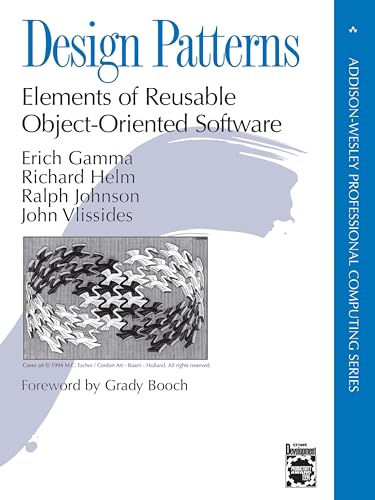
1.Addison Wesley Design Patterns Software Book
Reusable object-oriented patterns help structure flexible software

2.Packt Publishing Design Patterns in Rust Book
Apply idiomatic Rust approaches to real-world software design patterns

3.Packt Publishing React Design Patterns Book
Apply industry practices to build and deploy production-ready apps
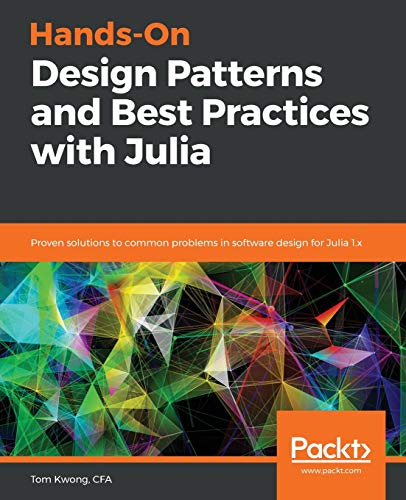
4.Packt Publishing Hands-On Design Patterns
Use proven solutions to common software design problems in Julia 1.x

5.O'Reilly Head First Design Patterns 2nd
Learn to build extensible and maintainable object-oriented software

6.Packt Publishing RESTful API Design Patterns
Use real-world REST patterns and lifecycle practices to design APIs

7.Majosta Design My Pattern Step-By-Step Guide
A beginner-friendly, step-by-step guide to designing patterns
1. Addison Wesley Design Patterns Software Book
Design Patterns: Elements of Reusable Object-Oriented Software explains how object-oriented software can use repeatable design approaches. Its title makes it a relevant choice for readers who want to study design patterns and how they relate to reusable software.
The book’s subject suits software developers learning how to structure object-oriented programs. Readers can use it as a starting point for exploring patterns as a way to think about software design, rather than as a general programming guide.
The title also points to a focused topic: reusable object-oriented software. That focus may help readers decide whether the book matches their goals before they choose it, especially if they are looking for material centered on design patterns.
The listing provides no details about the book’s contents, edition, language, format, or intended experience level. Buyers who need those specifics should check the listing carefully before ordering, since the available product details do not answer them.
Its listed weight is about 7.4 ounces. The product measures about 9.3 inches deep, 7.6 inches wide and 1 inch high, which gives readers a sense of its physical size when considering where to store it.
The listing’s only additional description is a general endorsement, not a detail about the book’s coverage. This title is best suited to readers who specifically want a book on design patterns and reusable object-oriented software.
- Focuses on design patterns and object-oriented software
- Addresses reusable software design as its subject
- About 7.4 ounces, a light listed weight
- Listing gives no details about its contents
2. Packt Publishing Design Patterns in Rust Book
For Rust developers who want to apply design patterns in real projects, this Packt Publishing book focuses on idiomatic approaches to software design. Its subject makes it relevant to readers choosing a practical guide to patterns in Rust.
The book connects design patterns with best practices, giving Rust learners a way to consider not just what a pattern is, but how to apply it in Rust. That focus can help readers build their understanding of software design around the language they use.
Its coverage centers on real-world software design rather than patterns in the abstract. Readers looking to strengthen their Rust skills may find that combination useful for thinking through design choices in their own projects.
At about 1.7 pounds, it is a substantial physical book to hold or carry. Its main listed appeal is the Rust-specific focus, which suits developers who want to study idiomatic design approaches in that language.
This is a focused choice for Rust programmers who want to develop their software design skills through patterns and best practices. Readers seeking a general design patterns reference will want to weigh that language-specific scope.
- Applies design patterns specifically to Rust development
- Connects idiomatic approaches with real-world design
- Aims to strengthen readers' Rust skills
- Its focus is limited to Rust software design
3. Packt Publishing React Design Patterns Book
Production-ready web applications are the focus of *React Design Patterns and Best Practices*, a Packt Publishing book about designing, building and deploying React projects. Its title points to readers who want to apply design patterns while developing web applications, rather than study patterns without a practical setting.
The book brings design patterns and best practices together around production-ready work. That scope may suit developers who want to think about how application structure connects to the needs of a finished project, from initial design through deployment.
Its subject is React, so readers looking for guidance on that framework can weigh it against books devoted to general software design. The title also signals an emphasis on industry practices, which may help developers looking for a framework-centered reference for their work.
At about 2.5 pounds, this is a substantial physical book to carry between home, school or work. Its listed size is about 9 inches tall, making it a standard-sized volume for reading at a desk or keeping on a bookshelf.
The available product details do not name specific patterns, examples or chapters, so buyers cannot compare the book’s coverage from those details alone. It suits React developers seeking a book framed around design patterns, best practices and production-oriented application development.
- Covers React patterns for production applications
- Combines design, building and deployment topics
- Focuses on industry practices for React projects
- No major cons
4. Packt Publishing Hands-On Design Patterns
Julia programmers looking for practical design guidance get a focused resource in this Packt Publishing book. *Hands-On Design Patterns and Best Practices with Julia* centers on common software design problems and solutions for Julia 1.x.
The title points to two useful angles: design patterns and coding practices. Together, they give readers a way to explore recurring design challenges in the context of Julia rather than studying patterns without a language focus.
Its emphasis on hands-on solutions may suit readers who want to connect software design ideas to practical problems. The book is aimed specifically at Julia 1.x, so its scope is clearest for people working with that version of the language.
The listing provides no chapter details or other information about the patterns covered. Buyers should check the book’s contents before purchasing if they need guidance on a particular topic or project.
At about 2 pounds, it is a substantial print book rather than a small carry-around volume. Its 9.25-inch height and 7.5-inch depth give it a standard book format for desk or shelf use.
This book suits Julia developers who want to study design patterns and practical approaches to common software design problems, especially those working with Julia 1.x.
- Focuses on design patterns for Julia 1.x
- Addresses common software design problems
- Combines patterns with practical best practices
- Listing gives no details on covered patterns
5. O’Reilly Head First Design Patterns 2nd
At a desk, in a classroom or beside a coding project, Head First Design Patterns offers a book-length look at object-oriented software design. Its second edition focuses on building software that can be extended and maintained.
The title centers on design patterns, which give developers named approaches to recurring software design problems. That focus can help readers connect object-oriented concepts with choices they face while planning or revising code.
The book’s stated scope also makes it relevant beyond a first introduction: it covers both extensibility and maintainability. Readers choosing a design patterns book can weigh those themes against the questions they want to answer in their own projects.
O’Reilly publishes this edition. Its title identifies it as the second edition, useful for buyers comparing editions, while the available product information does not list specific patterns, languages or sample projects.
At about 2.6 pounds, it is a substantial book to carry between home, class and work. Its listed size is about 9 inches tall, so it can sit with other programming books on a shelf.
This book suits developers and students who want a dedicated resource on object-oriented design patterns, especially readers interested in software that remains easier to extend and maintain.
- Second edition brings updated design patterns guidance
- Focuses on building extensible object-oriented software
- Emphasizes maintainable software design practices
- No major cons
6. Packt Publishing RESTful API Design Patterns
REST API design patterns give developers ways to structure interfaces, manage their lifecycles and document them with OpenAPI. RESTful API Design Patterns and Best Practices focuses on applying those ideas to real-world API design.
The book covers REST API patterns and best practices, with lifecycle management as one of its named topics. That makes it relevant to readers who want to consider how APIs are designed and maintained, not only how individual endpoints work.
OpenAPI practices are another focus, giving the book a place in a developer’s reference shelf for API documentation topics. Its title points to practical examples, though the listing does not provide details about the specific patterns or examples inside.
At about 1.5 pounds, it is a substantial book to carry between home and work. The listed dimensions make it a roughly 9-inch-tall, 7.5-inch-deep volume, so it can fit among other technical books on a shelf.
Packt Publishing’s book suits developers and software designers who want a focused guide to REST API patterns, lifecycle management and OpenAPI. Buyers seeking a particular programming language, sample project or edition should check the book’s contents before ordering, since the listing does not specify those details.
- Covers REST API patterns and best practices
- Includes lifecycle management as a topic
- Addresses OpenAPI practices for API design
- Listing gives no detail on specific examples
7. Majosta Design My Pattern Step-By-Step Guide
Majosta offers *Design My Pattern*, a beginner book that introduces pattern design through a step-by-step guide. Its Gold Series label and Beginner Book 1 designation identify it as an entry-level starting point in the Design My Pattern Series.
The title signals a guided approach rather than a reference aimed at experienced pattern designers. Readers who are new to the subject can consider it as a first book, while the series name helps distinguish it from other pattern-design books.
The listing provides no details about the book’s specific lessons, projects, tools, or techniques. Buyers who want to compare its subject coverage with another design book will need more information before choosing it.
At about 6 inches tall and weighing about 0.24 pounds, the book is small and light to carry or keep beside a workspace. Its listed width is about 0.14 inches, making it a slim volume.
This is the final pick for readers seeking a beginner-focused guide with a step-by-step format. The available details suit someone looking for an introductory book, though they do not establish how much material it covers.
- Beginner Book 1 offers an entry-level start
- Step-by-step guide signals a guided format
- Part of the Design My Pattern Series
- Listing gives no lesson or project details
How to Choose the Best Design Patterns Books
The right design patterns book depends on what you build, which language or framework you use, and how you prefer to learn. Check its scope, edition, examples, and format so the material fits your work and your budget.
| If You Need | Look For | Expect |
|---|---|---|
| General object-oriented foundations | Language-neutral pattern coverage | More abstract examples |
| A specific programming language | Current, language-focused examples | Less cross-language coverage |
| React application guidance | React-specific patterns and deployment topics | Narrower framework scope |
| REST API design help | API lifecycle and specification practices | Less general software design |
| Beginner-friendly teaching | Step-by-step explanations and exercises | Slower coverage of advanced topics |
| A book for commuting | Compact size and lower weight | Smaller pages or print |
| A desk reference | Broad index and organized chapters | More weight and shelf space |
Topic and Scope
Start with the problem you want the book to solve, because “design patterns” covers many areas of software work. A general object-oriented text suits readers building foundations, while a language or framework guide targets decisions in a particular environment.
For daily development, choose a book whose subject matches your stack, such as a programming language, web framework, or API design. A close match makes examples easier to apply, but a narrow focus offers less help outside that ecosystem.
Also look at the promised scope: some books focus on reusable solutions, while others cover building, deployment, API lifecycle, or maintainability. Broader coverage helps when you want a wider reference, but it may spend less time on your immediate question.
Language and Framework Fit
A pattern is an approach to a recurring design problem, but its code and idioms differ across languages. Look for examples written in the language you use, especially when you are learning its conventions as well as the pattern itself.
Framework-specific books are useful when your work depends on that framework’s components, data flow, or deployment practices. Their advice is more directly relevant, but it may age faster as the framework changes.
If you work across several stacks, a language-neutral foundation may travel better between projects. Pair it with focused material when you need practical examples, since general explanations may not show the details of a particular toolset.
Reader Level
Choose a level that matches what you already know, not only the job title you hold. Beginners benefit from clear definitions, gradual examples, and a steady path from simple ideas to more complex design choices.
Readers with experience often need context for when a pattern helps and when it adds needless structure. Look for discussion of trade-offs and alternatives, because memorizing pattern names alone rarely helps with real design decisions.
A step-by-step format can make unfamiliar ideas less intimidating, while a dense reference suits readers who already know the basics. Consider whether you want guided learning, quick lookup, or a mix before choosing.
Teaching Style
Books teach through different methods, including diagrams, conversation-style explanations, code examples, and formal descriptions. Choose a style you can stay focused on, because the clearest presentation for one reader may feel slow or distracting to another.
Visual explanations can help you follow object relationships and how parts interact. Check that diagrams support the text rather than replace useful code or explanation, particularly if you need to apply patterns in a working project.
Practical examples connect an idea to a problem you might face, but examples are most useful when the author explains why the design works. Prefer material that makes the reasoning clear, not just code to copy.
Examples and Practice
Look for examples that show a pattern solving a recognizable problem, then explain the costs it brings. This helps you decide whether the approach fits your project instead of applying it automatically.
Exercises or step-by-step tasks suit learners who want to test their understanding as they go. A reference-style book may offer fewer guided activities, but it can be faster to consult during a specific design question.
For production work, examples should address concerns such as maintainability, extensibility, or deployment when those topics match your goals. Treat any sample code as a learning aid, and confirm details against current documentation before using it.
Edition and Currency
Check the edition and publication details before buying, especially for books about a fast-changing language or framework. Newer coverage is more likely to reflect current practices, though an older book may still explain lasting design ideas well.
A book tied to a specific language version deserves closer scrutiny if your projects use a later release. Look for the version named in its scope, then compare it with your development environment.
Foundational patterns tend to remain useful, but examples and tool advice can date. For long-term learning, favor clear principles; for immediate implementation, prioritize material that aligns with the versions and practices you use.
Reference and Organization
A useful reference lets you find a relevant idea without rereading the whole book. Look for clear chapter titles, a contents page, an index, and consistent names for patterns or concepts.
A book arranged as a guided course may be better for reading from start to finish than for quick lookup. That structure suits a first study, but it can take longer to locate one answer later.
If you expect to return to the book during project work, consider whether its organization supports scanning. Short sections and a strong index help, while a continuous narrative may serve deeper learning better.
Print Format and Portability
Physical size and weight affect where you will read and keep the book. A lighter, compact book is easier to carry, while a larger volume may offer more room for diagrams and code.
The listed weight provides a rough sense of portability, but page count and binding also affect how comfortable a book feels in a bag or on a desk. If you commute with it, favor a manageable size.
For home or office reference, weight may matter less than readable page layout. Check the listed dimensions and consider your shelf space, reading position, and whether you prefer a book that lies open beside a computer.
Price and Value
Lower-priced options usually suit readers exploring a topic or seeking a focused introduction, while higher prices often reflect length, specialist coverage, or a more substantial reference. Compare the scope with what you will actually use.
Paying more is worthwhile when the book addresses your language, framework, or work needs in useful depth. It is harder to justify a premium for broad coverage if you only need one narrow topic.
Also consider whether you will read it once or consult it across projects. A lasting reference can justify a higher outlay, while a brief learning goal may call for a simpler, less costly choice.
Intended Use
Decide whether you are buying for study, a current project, or long-term reference, because each calls for a different balance. A learner needs a clear progression, while a working developer may value targeted examples and fast navigation.
For a project-specific need, match the book’s topic closely and confirm its examples fit your stack. A general guide can build broad understanding, but it may not answer detailed implementation questions.
If the book is for someone else, consider their experience and interests before focusing on advanced coverage. A suitable level and subject are more useful than a broad title that does not match their work.
Frequently Asked Questions
Do these design patterns books require batteries or a power source?
No. These are books, so they do not need a power source; you can read them in print or digitally depending on the edition available.
What materials and build should I expect?
The titles cover topics from reusable object-oriented patterns to Rust, React, Julia, and REST APIs. Check the specific listing for details such as format, binding, and included digital content.
What comes in the box with these books?
The main item is the selected book. Any extras, such as digital materials, depend on the particular edition and should be confirmed in its product details.
Should I choose Addison Wesley Design Patterns Software Book or O’Reilly Head First Design Patterns 2nd?
Choose Addison Wesley for reusable object-oriented patterns, or O’Reilly Head First for learning to build extensible and maintainable object-oriented software. Compare their descriptions and formats to decide which better fits your learning needs.
Which book is best for learning design patterns in Rust or Julia?
Packt Publishing Design Patterns in Rust focuses on idiomatic Rust approaches, while Packt Publishing Hands-On Design Patterns applies solutions to common software design problems in Julia 1.x.
Which book should I choose for React apps or REST APIs?
Choose Packt Publishing React Design Patterns for industry practices aimed at production-ready apps, or Packt Publishing RESTful API Design Patterns for real-world REST patterns and API lifecycle practices.
How can a beginner get started with designing patterns?
Majosta Design My Pattern Step-By-Step Guide is described as beginner-friendly and provides a step-by-step approach. For a language-specific topic, choose the book focused on that language or platform.
So, What Should You Buy?
For most readers, O’Reilly’s *Head First Design Patterns, 2nd Edition* is the best pick, with a focus on building extensible, maintainable object-oriented software. Choose Addison Wesley’s *Design Patterns* for reusable object-oriented patterns, or Majosta’s step-by-step guide if you’re new to the subject.
For language-specific learning, pick Packt’s Rust, React, Julia, or RESTful API design book to match your project. Choose the book that fits your goals and start building better-designed software.