

Calisthenics helps you build strength with movements like push-ups, squats, and pull-ups, using little or no equipment. Without clear guidance, it’s easy to repeat the same routine, miss good form cues, or struggle to make each exercise harder over time.
For steady guidance, a calisthenics book can give your workouts structure. It explains exercises, lays out progressions, and helps you move from easier variations to more challenging ones at a pace that suits your current strength.
Many books include illustrations that clarify body position, sample routines that save planning time, and training advice that helps you balance practice and rest. You can follow a focused plan at home or take a few pages to the park.
Books differ in their skill focus, reading level, and workout plans, so consider your goals and experience before choosing. Explore the best calisthenics books below to find guidance that fits your training.
8 Best Calisthenics Books Reviews

1.North Atlantic Books Complete Calisthenics
Bodyweight exercise guidance helps you build strength with

2.Callisto Calisthenics for Beginners Guide
Step-by-step workouts help beginners build strength at any fitness

3.The Calisthenics Bible Bodyweight Guide
A 90-day bodyweight program takes you from zero to muscle-up training

4.Majosta Calisthenics Workout Book
Step-by-step plans and video demos guide muscle-building workouts at

5.The Ultimate 28-Day Military Calisthenics
Joint-friendly 15, 30 and 45-minute workouts build strength at home
6.Majosta Calisthenics Playbook Push Pull Squat
Comic-style bodyweight workouts build strength with push, pull and

7.Majosta Calisthenics Exercises Guide
Step-by-step exercises range from beginner to advanced to build muscle

8.Majosta Bodyweight Training & Calisthenics
Progressive bodyweight workouts guide beginners and advanced trainees
1. North Atlantic Books Complete Calisthenics
Complete Calisthenics, Second Edition is a guide to bodyweight exercise for readers interested in training without relying on gym machines. Its title points to a focus on calisthenics, where exercises use your body weight as resistance.
The book’s second edition may suit readers looking for a dedicated resource on bodyweight training. The available product details do not list its exercises, training plans or skill levels, so check the contents before buying if you need guidance for a specific goal.
At about 1.6 pounds, it is light enough to carry between home, a gym or a class. Its black cover and roughly 9.6-inch height give it a familiar book format for browsing or keeping with other training references.
The listing does not specify page count, binding, illustrations or the kinds of progressions it teaches. That makes it harder to judge how detailed or beginner-friendly the material is from the product information alone.
For readers building a bodyweight routine, this book is worth considering for its direct focus on calisthenics. It is best suited to buyers who want a book centered on bodyweight exercise and are comfortable checking the contents for the specific instruction they need.
- Focuses on bodyweight exercise and calisthenics
- Second edition offers a dedicated training guide
- About 1.6 pounds for carrying between locations
- Listing does not detail exercises or training plans
2. Callisto Calisthenics for Beginners Guide
For building strength through bodyweight exercise, Calisthenics for Beginners lays out step-by-step workouts for people at any fitness level. Its focus on calisthenics makes it a book to consider if you want to work on strength without centering your training on weights.
The title points to a gradual approach, with workouts designed for beginners as well as readers with different levels of fitness. That range may help the book suit someone starting out and someone who already exercises but wants a bodyweight routine.
Step-by-step workouts give the book a practical focus rather than presenting calisthenics only as a subject to read about. Readers can use the routines as a guide while working through strength-building exercises at their own pace.
The listing does not provide details about individual exercises or workout schedules, so buyers who want to compare specific routines will need more information before choosing. The title does make the intended focus clear: calisthenics workouts aimed at developing strength.
Callisto’s book weighs about 2.3 pounds and measures about 9 inches tall, making it a substantial paperback-sized volume to keep with training materials. Its 7.5-inch depth and slim 0.4-inch width give a sense of its format.
This book suits beginners and other fitness levels who want a step-by-step calisthenics workout guide for strength training. Readers looking for a book with listed exercise details may want to check the contents before buying.
- Step-by-step workouts guide bodyweight training
- Aimed at readers of any fitness level
- Focuses on building strength with calisthenics
- No major cons
3. The Calisthenics Bible Bodyweight Guide
90 days is the length of the bodyweight training program in The Calisthenics Bible, which aims to take readers from zero to a muscle-up. It focuses on building muscle and improving mobility through calisthenics, so readers have a structured starting point for training.
The book also frames its program around training without injury. That goal may appeal to beginners who want a guided introduction to bodyweight exercise, as well as readers who want to work toward more advanced moves.
Its 11-inch height and 8.5-inch depth give the book a large page format for following written guidance. The listed width is about a third of an inch, making the book slim to store on a shelf or keep near a workout space.
The title promises a path from beginner level to a muscle-up, but the product details do not list individual exercises, progressions or equipment needs. Readers who want those specifics before buying may need more information.
For anyone choosing a calisthenics book, the main draw is a 90-day bodyweight program with goals that span strength, mobility and skill. It suits readers looking for a set training plan, especially those starting from the basics.
- 90-day bodyweight program guides structured training
- Progresses from beginner level to the muscle-up
- Covers muscle building and mobility improvement
- Aims to support injury-free training
- No major cons
4. Majosta Calisthenics Workout Book
Beginners and experienced athletes looking to build muscle at home get a 90-day calisthenics program with this Majosta workout book. It covers both training levels, so readers can start with beginner exercises or use plans aimed at more advanced practice.
Step-by-step plans explain how to approach the exercises, while anatomical illustrations show the body and muscles involved. That visual guidance can help readers connect each movement with the muscles they are training as they work through the program.
Video demos offer another way to follow the exercises. Readers can watch a movement as well as consult the book’s instructions and illustrations, which may help them understand how each exercise fits into a workout.
The title also highlights plateau-focused exercises, giving readers material aimed at changing their training when progress stalls. The book’s at-home focus makes its plans relevant to people building a routine without relying on a gym.
At about 0.75 pounds, it is light to carry between rooms or pack with other workout materials. Its roughly 11-inch height gives the printed plans and anatomical illustrations room to appear on the page.
This book suits beginners who want guided calisthenics plans and more experienced trainees seeking a 90-day home program with exercise demos and anatomy illustrations.
- 90-day program gives training a clear structure
- Plans cover beginners and advanced trainees
- Video demos help explain each exercise
- Anatomical illustrations show muscles involved
- No major cons
5. The Ultimate 28-Day Military Calisthenics
For home workouts, this book offers a 28-day military calisthenics plan for men over 50. It uses bodyweight exercises, so readers can follow the program without buying exercise equipment.
The plan focuses on building strength, energy and a leaner body through calisthenics. Its joint-friendly approach is designed for men in their 50s and 60s, making the intended audience clear before they begin.
Workouts come in 15-, 30- and 45-minute options. That range gives readers a choice of session length, whether they have time for a brief workout or want to set aside more of the day for exercise.
The 28-day structure gives the book a defined program length rather than a collection of unrelated routines. Readers who prefer to follow a set plan can use the stated schedule to guide their home workouts.
No equipment is required, so the exercises can fit into a home routine without a separate gear purchase. The book suits men over 50 who want a structured, bodyweight calisthenics plan, with shorter and longer workout options to match their available time.
- No equipment needed for home workouts
- Offers 15-, 30- and 45-minute sessions
- Joint-friendly plan aimed at men over 50
- Structured 28-day calisthenics program
- No major cons
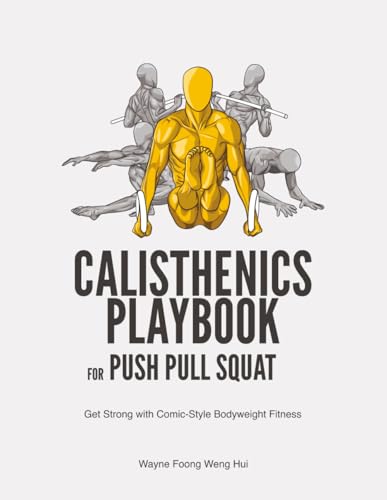
6. Majosta Calisthenics Playbook Push Pull Squat
Push, pull and squat movements anchor this calisthenics book, which presents bodyweight fitness in a comic-style format. Its title frames the material around getting stronger through three core movement patterns.
The book focuses on exercises that use your own body for resistance. Push, pull and squat work gives readers a simple structure for exploring strength training without making equipment part of the title’s promise.
Comic-style presentation may appeal to readers who prefer visual material alongside their fitness reading. The title does not specify particular routines or instructions, so buyers should check the book’s contents if they want details about exercise selection.
At about 11 inches tall, the book has a tall page format for reading at home or carrying in a bag. Its listed width is about a quarter inch, and the book weighs about 0.6 pounds.
The title’s focus on bodyweight fitness makes it relevant to readers seeking calisthenics material rather than a general strength-training book. Push, pull and squat offer three familiar categories for organizing a bodyweight routine.
Majosta’s comic-style calisthenics book suits readers who want a visual introduction to push, pull and squat training. It may be less suited to shoppers who need confirmed details about specific exercises before buying.
- Covers push, pull and squat bodyweight training
- Comic-style format adds a visual approach
- Focuses on calisthenics rather than general fitness
- Title gives no details about specific exercises
7. Majosta Calisthenics Exercises Guide
Majosta presents a calisthenics guide that covers exercises from beginner to advanced levels. Its focus on bodyweight training gives readers a route through different stages of exercise as they build a workout routine.
The title describes the book as a step-by-step guide, which may help readers follow its exercise approach in sequence. It also frames the workouts around building muscle, making strength development the central goal.
Beginners can use the stated level range to find a starting point, while advanced readers can look for material suited to more experience. The listing does not name specific exercises, so buyers should check the book’s contents if they want to confirm coverage of a particular movement.
Its compact format weighs about 0.4 pounds and measures 9 inches tall. That makes it a light book to carry between home and the gym, or to keep nearby while planning a workout.
The listing provides no details about illustrations, equipment needs, training plans, or the number of exercises. Readers who want those specifics may want to review the contents before buying. This book suits people looking for a calisthenics guide that spans beginner through advanced training and centers on muscle-building workouts.
- Covers beginner through advanced exercise levels
- Step-by-step format guides workout learning
- Focuses on calisthenics and muscle building
- Lightweight at about 0.4 pounds
- Listing gives no details on exercises
8. Majosta Bodyweight Training & Calisthenics
With progressive bodyweight workouts and calisthenics, Majosta’s book is aimed at readers who want to build training skills from beginner level and continue beyond it. Its title also identifies weight training and resistance workouts as part of the book’s scope.
The book focuses on bodyweight training, so its subject suits readers looking to work out without making equipment the center of their routine. Calisthenics is the other main focus, giving the book a clear place in a collection of guides to that style of exercise.
The title describes the workouts as progressive and intended for beginners and more advanced readers. That stated range may appeal to someone seeking a book whose training focus extends beyond introductory exercises.
At about 0.6 pounds, the book is light to carry between home and the gym or to keep beside your workout space. Its paperback-sized format measures about 6 inches deep and 9 inches tall.
The listing gives no details about specific exercises, workout plans, illustrations or training schedules, so buyers cannot compare those aspects from the available information. As our final pick, it suits readers interested in a bodyweight and calisthenics book that also covers weight training and resistance workouts.
- Covers bodyweight training and calisthenics
- Progressive focus spans beginners and beyond
- Also covers weight and resistance workouts
- Listing gives no specific workout details
How to Choose the Best Calisthenics Books
Choosing a calisthenics book around your current ability, goals and schedule can make training easier to follow and safer to progress. Consider how clearly it teaches exercises, structures workouts and fits your preferred learning style.
| If You Need | Look For | Expect |
|---|---|---|
| A beginner starting point | Easier variations and clear instructions | Slower progress toward advanced skills |
| A structured routine | Weekly schedule and planned progression | Less freedom to change sessions |
| Short home workouts | No-equipment exercises and brief sessions | Fewer exercise choices |
| Muscle-building guidance | Strength-focused plans and harder variations | More demanding sessions |
| Skill development | Prerequisites and step-by-step drills | Longer practice before full skills |
| Visual learning | Detailed pictures or video links | More page space or screen use |
| Joint-conscious training | Easier options and recovery guidance | Gradual increases in difficulty |
Starting Level and Progression
A book should meet your current ability, because exercises that start too hard can stall progress or encourage poor form. Look for beginner variations, clear prerequisites and advice for moving up when you can complete each movement steadily.
Progression means increasing difficulty in planned steps, such as changing leverage, repetitions or rest time. A useful guide explains when to advance and when to repeat a level, so you are not left guessing whether a workout is too easy.
If you already train regularly, look for harder variations and ways to keep building strength. A book aimed at all levels is useful only when it explains how to move between levels, rather than simply listing easier and harder exercises.
Exercise Instructions and Form
Clear instructions help you understand how to set up, move and finish each repetition, which supports safer practice at home. Look for written cues about body position, breathing and common mistakes, not just exercise names or brief descriptions.
Illustrations can show hand placement, body alignment and the movement path, while anatomical drawings explain which muscles work. These details suit visual learners, though crowded pages or small diagrams can be harder to follow during a workout.
Video demonstrations add another way to see timing and movement, especially for unfamiliar exercises. Check whether links or codes are easy to access and whether the videos explain technique, because a demonstration without useful cues may not answer your questions.
Workout Structure and Schedule
A clear plan tells you which exercises to do, how many sets or repetitions to complete, and when to rest. This structure helps you start training without building every session from scratch, especially if you are new to programming.
Programs lasting several weeks offer a ready-made routine and a sense of direction, but their pace may not suit every reader. Look for rest days, progression instructions and options to repeat a week if the planned workload feels too demanding.
Short sessions suit busy schedules, while longer workouts leave more room for warm-ups, practice and strength work. If a book offers different session lengths, see whether each option still forms a balanced routine rather than simply cutting exercises.
Training Goals and Exercise Range
Match the book’s main focus to what you want from training, such as strength, muscle growth, mobility or learning a specific skill. A focused plan gives you a clearer path, but it may spend less time on other goals.
For general strength, look for balanced pushing, pulling and leg exercises, along with core work. A narrow selection can leave gaps, so see whether the book includes alternatives for muscles or movement patterns that receive little attention.
Skill goals such as a muscle-up require preparation, not just a final exercise description. Look for supporting drills, prerequisite strength and realistic progression, because advanced skills often take longer than a fixed program suggests.
Equipment and Training Space
No-equipment routines suit home workouts and travel, but some pulling movements still need a secure bar or another sturdy anchor. Read the equipment requirements closely so you do not buy a plan that depends on gear you lack.
A book that includes resistance exercises or equipment-based options offers variety and ways to increase challenge. That flexibility takes storage, setup and extra spending, so consider whether you want bodyweight-only training or a broader home setup.
Safety and Recovery Guidance
Useful guidance covers warm-ups, rest, gradual increases and signs to stop an exercise. These details help you manage training load, especially when returning after time away or learning unfamiliar movements without an instructor nearby.
Joint-friendly language is not a guarantee that every exercise suits your body. Look for lower-impact alternatives and instructions to adjust range or difficulty, and seek qualified advice if you have an injury or ongoing pain.
Recovery matters because frequent hard sessions can undermine progress. Choose a plan that schedules rest and explains how to respond to soreness or fatigue, rather than urging you to push through every workout.
Learning Format and Readability
Choose a format you will actually use during training, whether that means step-by-step text, diagrams, video links or a more visual presentation. A style that keeps your attention makes it easier to return to the plan consistently.
Page size and book weight affect how easily you can read instructions beside your workout space. A larger layout may give diagrams more room, while a lighter book is easier to carry; print size and page clarity also matter.
Audience and Adaptability
Some plans are written for a particular age group, gender or training situation, while others address a wider range of readers. A targeted plan may reflect relevant needs, but its advice should still fit your own ability and circumstances.
Look for ways to adjust exercises, session length and rest periods to your schedule. A plan with practical substitutions is easier to maintain when equipment, available time or current fitness changes.
Price and Value
Lower-priced books may offer a compact exercise guide, while higher prices often reflect more detailed instruction, illustrations, video support or a longer plan. Compare what you will use, rather than treating price as a measure of training quality.
Paying more is worthwhile when added guidance solves a real need, such as learning form visually or following a structured program. If you only need exercise ideas, a simpler guide may cover the essentials without extra features.
Durability and Warranty
A printed book needs to hold up to repeated use, especially if you keep it open beside your workout space. Look for a binding that lies open comfortably and pages that remain readable with frequent handling.
Warranty or return terms are less central than the training content, but they help if an order arrives damaged or differs from its description. Review the seller’s policy before buying, particularly when purchasing a physical copy.
Frequently Asked Questions
Do these calisthenics books require equipment or a power source?
The guides focus on bodyweight workouts, and none of the listed features specify a power source. Check each book’s exercise instructions to see whether any movements call for optional equipment.
Which book is best for someone new to calisthenics?
Callisto Calisthenics for Beginners Guide offers step-by-step workouts for beginners. Majosta Calisthenics Exercises Guide also includes exercises from beginner to advanced levels.
Should I choose The Calisthenics Bible Bodyweight Guide or The Ultimate 28-Day Military Calisthenics?
Choose The Calisthenics Bible for its 90-day program that progresses toward muscle-up training. Choose The Ultimate 28-Day Military Calisthenics for joint-friendly workouts in 15-, 30- and 45-minute formats.
What comes with Majosta Calisthenics Workout Book?
Its listed features include step-by-step workout plans and video demonstrations. The product details provided do not specify any additional materials.
Which book is suited to push, pull and squat workouts?
Majosta Calisthenics Playbook Push Pull Squat is specifically organized around push, pull and squat bodyweight workouts in a comic-style format.
How can I choose a book for my current fitness level?
For beginner-focused guidance, consider Callisto Calisthenics for Beginners Guide; for a range of levels, Majosta Calisthenics Exercises Guide covers beginner through advanced exercises. Majosta Bodyweight Training & Calisthenics also offers progressive workouts for beginners and advanced trainees.
Which book should I pick for building strength at home?
The Ultimate 28-Day Military Calisthenics features home workouts, while North Atlantic Books Complete Calisthenics provides bodyweight exercise guidance for building strength. Choose based on whether you want a short-format workout plan or broader exercise guidance.
So, What Should You Buy?
For most readers, North Atlantic Books Complete Calisthenics is the best all-around pick for building strength with bodyweight guidance. Beginners can start with Callisto Calisthenics for Beginners Guide, while The Calisthenics Bible suits those seeking a structured 90-day path toward muscle-up training.
Choose The Ultimate 28-Day Military Calisthenics for joint-friendly workouts at home, or Majosta Calisthenics Playbook Push Pull Squat for comic-style routines. For step-by-step exercise options across skill levels, consider Majosta Calisthenics Exercises Guide. Pick the book that matches your goals and get started.