

French can make travel, films, food, and conversations feel richer, while steady study helps you build useful skills at your own pace. Without a clear guide, apps and scattered online lessons can leave you unsure what to learn next or how grammar fits together.
For a more focused path, a French language learning book gives your study sessions structure. Lessons introduce vocabulary and grammar step by step, while exercises let you practice reading, writing, and sometimes listening without jumping between screens.
Many books include pronunciation tips, answer keys, dialogues, and cultural notes, so you can check your progress and connect new phrases with everyday situations. Short lessons also make it easier to fit French practice around work, school, or travel plans.
Books differ in level, teaching style, and audio support, so choose one that suits your goals and current knowledge. Explore the best french language learning books below to find a helpful guide for your French studies.
7 Best French Language Learning Books Reviews
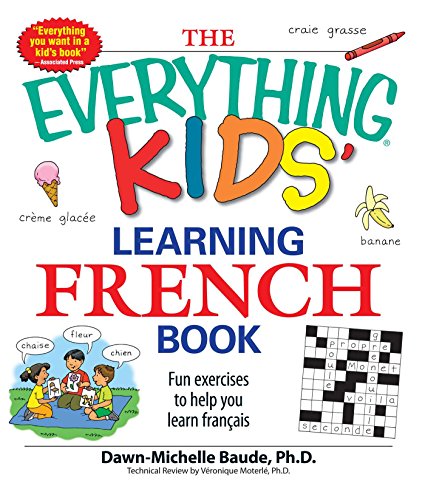
1.Simon & Schuster Learning French Book for
Fun exercises help kids learn French through activities made for them

2.Majosta Easy Learn French Adult Beginner Book
15-minute daily lessons teach grammar, verbs and vocabulary in 30 days

3.Majosta Learn French Fast 8-in-1 Workbook
15-minute daily lessons and exercises build French skills step by step

4.Teach Yourself Short Stories in French
Short stories give beginners a way to build French reading practice

5.DOVER PUBNS Easy French Phrase Book
Over 700 phrases help you handle everyday conversations in French

6.DOVER PUBNS Color & Learn Easy French Phrases
Coloring pages help kids practice French phrases as they learn

7.Learn French With Short Stories for Beginners
Parallel French and English text builds vocabulary as beginners read
1. Simon & Schuster Learning French Book for
The Everything Kids’ Learning French Book helps young learners build French vocabulary through exercises. Its title points to an activity-based approach, which gives children a way to practice the language as they work through the book.
The book is part of the Everything Kids Series and focuses on learning French. Its exercises may suit children who prefer to engage with words and activities rather than rely only on explanations, though the listing does not describe the specific lessons.
It comes in an illustrated format, giving the pages a visual element alongside the learning activities. Since the listing does not name a reading level or the topics covered, adults may want to check the book’s contents before choosing it for a child with a particular learning goal.
At about 9 inches tall and 8 inches across, the paperback-sized book can fit on a desk or in a school bag. Its listed weight is about 0.7 pounds, so children can carry it with other books without adding much weight.
The title highlights fun exercises, but the product details do not say how many activities it includes or whether it provides pronunciation help, answer keys or audio. Buyers looking for a structured course may need more information about those features before deciding.
For families seeking an illustrated French activity book for children, this offers a focused option from Simon & Schuster. It is best suited to young learners who want practice through exercises, while adults should confirm that its contents match the child’s age and goals.
- French exercises give children active practice
- Illustrated format adds visual interest to lessons
- Lightweight at about 0.7 pounds to carry
- Listing does not specify lesson topics or level
2. Majosta Easy Learn French Adult Beginner Book
For adult beginners who want a daily French study routine, this book lays out lessons that take 15 minutes. Its title promises a 30-day path through grammar, verbs and vocabulary, giving learners a set of topics to work on in manageable sessions.
The all-in-one format brings those three core areas together in one book. That can help new learners move between grammar practice, verb study and vocabulary without needing separate books for each subject.
More than 200 practical exercises give readers opportunities to work with the material as they study. The title describes the lessons as step-by-step, which points beginners toward a guided sequence rather than a collection of unrelated topics.
The book is aimed at adults starting French, so it focuses on beginner-level learning rather than advanced study. Its 15-minute daily lesson format may suit readers who prefer short sessions and a planned course over open-ended practice.
At about 11 inches tall, the book has a large page format for printed lessons and exercises. It suits adult beginners looking for a structured introduction to French grammar, verbs and vocabulary in one volume.
- Covers grammar, verbs and vocabulary in one book
- 15-minute lessons suit short daily study sessions
- More than 200 exercises offer practice
- No major cons
3. Majosta Learn French Fast 8-in-1 Workbook
15-minute daily lessons give this French workbook a manageable pace for adult beginners. It combines eight learning components, including exercises, short stories and vocabulary material, so learners can work on several parts of French in one book.
The title also presents a path from beginner to advanced. That makes the book relevant to adults who want to start with basic lessons and continue through more challenging material, though the listing does not detail the level of each section.
Short stories add reading practice alongside the daily exercises. The vocabulary collection gives learners another way to build familiarity with French words, while the workbook format supports focused study in brief sessions.
At about 0.8 pounds, the book is light enough to carry between home, work or a class. Its compact, six-by-nine-inch format also fits easily on a desk or in a bag.
The listing provides no sample pages or details about audio, answer keys or grammar coverage, so buyers cannot judge those parts from the available information. It suits adult beginners who want short daily lessons and varied practice in a portable workbook.
- Eight learning components offer varied practice
- 15-minute lessons fit short daily study sessions
- Short stories add French reading practice
- Vocabulary collection supports word learning
- Listing gives no sample pages to preview
4. Teach Yourself Short Stories in French
French learners who want to build reading confidence get short stories in French with this Teach Yourself book. Its title points to beginner-level reading, making it a book to consider if you want to practice with stories rather than study only from lists of words.
The book’s small format is easy to bring along for a reading session away from home. It measures about 5 inches by 8 inches, so it can fit in a bag with other study materials or sit beside a notebook while you read.
At about half a pound, it is light enough to carry between home, class and a library. You can keep it nearby for short stretches of reading, or set it aside when you want to work through a longer study session.
The title gives the clearest guide to its purpose: it offers short stories, and it is aimed at beginners learning French. That makes the format relevant to readers who want to spend time with written French at an introductory level.
The listing does not give details about the number of stories, vocabulary support, exercises or audio, so buyers who want those specific study tools should check the book’s contents before choosing it. The available information focuses on its beginner story format and compact size.
This book suits new French learners who want a lightweight collection of short reading material to add to their language study routine.
- Beginner-focused stories offer French reading practice
- Short-story format breaks reading into smaller sessions
- About half a pound, so it’s easy to carry
- Compact size fits easily with study materials
- Listing gives no details about exercises or audio
5. DOVER PUBNS Easy French Phrase Book
For learners who want a compact guide to everyday French, this phrase book offers more than 700 phrases in a small paperback format. Its focus on common expressions gives beginners a practical reference for looking up useful language.
The book is part of Dover’s Language Guides French series, and its new-edition title makes it easy to identify among French learning books. You can keep it nearby for quick reference while studying or planning what to say in everyday situations.
At about 8 inches tall and just over 5 inches wide, it takes little room on a desk or in a bag. Its slim, roughly one-fifth-inch profile and weight of about 0.2 pounds make it easy to carry between home, class and travel.
The listing describes this copy as used and in good condition. That matters for buyers who want the phrase guide itself rather than a new copy, though the provided details do not specify the book’s exact physical condition.
This book suits beginners and travelers who want a lightweight collection of everyday French phrases to consult alongside other language-learning materials.
- More than 700 phrases for everyday French
- Compact size fits easily in a small bag
- Weighs about 0.2 pounds for carrying
- Listing offers a used copy, not a new one
6. DOVER PUBNS Color & Learn Easy French Phrases
Coloring and French phrase practice come together in Color & Learn Easy French Phrases for Kids, a small activity book for young learners. Its coloring-book format gives children a hands-on way to spend time with simple French phrases.
The book’s focus on easy phrases suits kids who are beginning to encounter French. Coloring adds an activity alongside reading, which can make short practice sessions more engaging for children who enjoy drawing and coloring.
Its compact size makes it easy to bring along for a car ride, a visit, or quiet time at home. At about 2.3 pounds, though, it weighs more than its small format might suggest, so it may feel heavy for a child to carry for long.
The title identifies the subject as French phrases for kids, rather than a broad language course. Families looking for a focused activity book can use it to introduce phrase practice, while the coloring format gives children another way to interact with the pages.
The listing does not specify the number of phrases, lesson structure, or any audio support, so buyers cannot judge those details from the available information. It is best suited to children and families seeking a coloring-based introduction to French phrases, not readers looking for a detailed course.
- Coloring gives kids a hands-on way to practice
- Focuses on easy French phrases for children
- Compact format is convenient to bring along
- About 2.3 pounds is heavy for its small format
7. Learn French With Short Stories for Beginners
The book pairs French and English short stories to help beginners build vocabulary through context. The Adventures of Clara begins a new chapter in France, giving learners a story to follow alongside the parallel-language text.
Parallel French and English passages let readers compare the two languages as they go. That format can help beginners connect new French words with familiar English meanings, rather than studying vocabulary as an isolated list.
The beginner focus makes this a starting point for readers who want to learn through short fiction. Clara’s story provides a continuing thread, while the France setting gives the narrative a place and context.
At about 6 by 9 inches, the book has a compact paperback-style footprint that can fit in a bag for reading away from home. It weighs about 0.45 pounds, so carrying it alongside other books or study materials adds little weight.
The supplied information does not specify the number of stories, vocabulary lists, exercises, or audio support. Buyers looking for those study tools should check the full listing before choosing it.
This book suits French beginners who prefer reading short stories with English alongside the French, especially learners who want a light book to carry and read in small sessions.
- Parallel French and English supports comparison
- Beginner stories build vocabulary through context
- Clara’s France setting gives the story a focus
- No major cons
How to Choose the Best French Language Learning Books
The right French book depends on your starting level, learning style, and how much time you can set aside. Consider whether you need structured lessons, reading practice, useful phrases, or activities for a child, then weigh portability, clarity, and price.
| If You Need | Look For | Expect |
|---|---|---|
| A planned beginner routine | Short daily lessons and exercises | Steady practice, limited flexibility |
| Grammar and vocabulary together | A course covering both topics | Broad coverage, denser pages |
| Reading practice | Short, level-appropriate stories | Contextual learning, less direct instruction |
| French beside English | Parallel translations and vocabulary | Easier comparison, less immersion |
| Phrases for travel or daily life | Organized everyday expressions | Quick reference, limited grammar |
| Activities for a child | Pictures, games, or coloring tasks | Engaging practice, narrower scope |
Learning Goal
Start with the skill you want to build, because a book designed for one purpose may leave other needs unmet. Grammar learners benefit from explanations and practice, while readers gain more from stories with manageable vocabulary.
For quick communication, look for everyday phrases grouped by situation, such as greetings, food, or directions. Children often respond better to short activities and pictures, while adult beginners may prefer a clear sequence of lessons.
A single book rarely teaches every skill equally well, so decide what you expect it to do. If speaking matters most, choose material with phrases and read-aloud practice; for comprehension, look for graded reading and vocabulary support.
Starting Level
Choose a book that matches what you already know, since material that is too easy wastes study time and overly difficult text can become discouraging. Beginners should see basic vocabulary, simple sentence patterns, and explanations of unfamiliar forms.
Look for a stated level and a sample page, then judge whether you understand most instructions without outside help. A beginner story should leave room to learn, but repeated unknown words on every line suggest a steep starting point.
If you have studied French before, review the contents for topics you know and gaps you still need to fill. A broad beginner-to-advanced label needs a clear progression, or you may find the later sections hard to navigate.
Lesson Structure
A planned course helps you build habits because each lesson tells you what to study next. Daily lessons of about 10 to 20 minutes suit busy learners, while longer sessions provide more room for explanation and practice.
Check whether the book sets a realistic schedule and divides topics into manageable steps. A fixed 30-day plan offers direction, but it may feel rushed if you need extra time to review verbs or pronunciation.
Flexible workbooks suit learners who prefer to choose their own pace, though they require more self-direction. Before buying, look for review sections or a contents page that shows how topics connect rather than appearing as isolated exercises.
Practice and Feedback
Exercises help turn new words and grammar into usable knowledge, so look for more than explanations alone. Fill-in activities, sentence building, and short translations each test different skills and reveal where you need more practice.
Answer keys are useful for independent study because they let you spot errors without a teacher. Confirm that answers are included and clearly linked to the exercises; without them, self-study can leave mistakes unresolved.
A large exercise count sounds helpful, but variety and fit matter more than the total. Choose practice that matches your goal: grammar drills for sentence accuracy, phrase prompts for everyday situations, or comprehension questions for reading.
Reading Support
Stories give new words context, which can make them easier to remember than isolated lists. Beginners should look for short chapters, simple sentence structures, and vocabulary support that does not interrupt every paragraph.
Parallel French and English text lets you compare meaning when a sentence is unclear, but frequent switching can reduce immersion. This format suits new readers who need reassurance; more confident learners may prefer French-only text with a glossary.
A vocabulary list can speed up reading, while too many unfamiliar words still slow the story. If possible, preview a sample and see whether you can follow the main idea without translating every sentence.
French and Pronunciation
French spelling and sound often differ, so pronunciation guidance helps you say new words with more confidence. Look for sound explanations, pronunciation notes, or audio access if speaking and listening are central to your goal.
Printed books alone cannot let you hear natural speech, so confirm whether any audio is included or available separately. If it is not, pair the book with a reliable audio resource and practise reading phrases aloud.
For phrase-focused learning, check that expressions include enough context to use them appropriately. A translation without notes on formality, gender, or situation may be hard to apply in a real conversation.
Audience and Format
Books for children should use age-appropriate language and activities that hold attention, such as pictures, games, or coloring. Check the intended age range and whether an adult needs to explain instructions or guide each activity.
Adults often benefit from direct explanations and practical examples rather than child-focused tasks. If a book combines several topics, review its contents to see whether the layout makes lessons easy to find and revisit.
Format affects where and how comfortably you study, especially if you carry the book around. A compact book suits commuting, while larger pages can give exercises and illustrations more room; consider the trade-off before choosing.
Price and Included Content
Lower-priced books often focus on one job, such as phrases or stories, while broader courses usually include more topics and exercises. Compare the contents and learning support, not just the page count or claims of completeness.
Paying more is worthwhile when the extra material matches your needs, such as answer keys, a clear lesson sequence, or useful audio support. If you only need travel expressions or occasional reading practice, a focused book may be enough.
Used copies can cost less, but condition affects usability: writing, missing pages, or damaged bindings may disrupt exercises. Confirm that the listing describes the copy’s condition, especially if you need clean pages for writing answers.
Portability and Page Use
A lighter, smaller book is easier to carry and use during short breaks, while a larger workbook may be easier to read and write in at a desk. Choose based on where you expect to study most often.
Look at the page size and layout, since small print or crowded exercises can make sessions tiring. If you plan to write directly in the book, leave enough space for answers; otherwise, prepare a separate notebook.
A book’s weight matters less if it stays at home, but it becomes noticeable on a daily commute. For children, also consider whether the size is easy to hold and whether pages suit coloring or pencil work.
Frequently Asked Questions
Which French learning book is best for kids?
Simon & Schuster Learning French Book uses activities and fun exercises made for children. DOVER PUBNS Color & Learn Easy French Phrases is another option, with coloring pages for practicing French phrases.
Which book is suited to an adult beginner with a daily study routine?
Majosta Easy Learn French Adult Beginner Book offers 15-minute daily lessons covering grammar, verbs, and vocabulary over 30 days.
What is the difference between the two Majosta books?
Majosta Easy Learn French Adult Beginner Book focuses on grammar, verbs, and vocabulary in a 30-day plan. Majosta Learn French Fast 8-in-1 Workbook pairs 15-minute lessons with exercises to build skills step by step.
Which book should I choose for French reading practice?
Teach Yourself Short Stories in French uses short stories to help beginners practice reading. Learn French With Short Stories for Beginners presents French and English text in parallel to support reading and vocabulary building.
What can help me handle everyday conversations in French?
DOVER PUBNS Easy French Phrase Book includes over 700 phrases for everyday conversations.
Do any of these books use coloring to teach French?
Yes. DOVER PUBNS Color & Learn Easy French Phrases uses coloring pages to help kids practice French phrases.
So, What Should You Buy?
The Majosta Easy Learn French Adult Beginner Book is the best pick for most beginners, with short daily lessons covering grammar, verbs and vocabulary. For a step-by-step workbook, choose Majosta Learn French Fast 8-in-1; for reading practice, consider Teach Yourself Short Stories in French or Learn French With Short Stories for Beginners.
Kids can learn through activities in the Simon & Schuster book or coloring with Dover’s Color & Learn Easy French Phrases. On a budget, or focused on useful conversation, Dover’s Easy French Phrase Book offers over 700 everyday phrases. Choose the book that fits your learner and learning style.