

Use small sturdy boxes, pack books flat or spine-down, fill gaps, label clearly.
Moving a library takes more than tape and hope. In this guide, I share how to pack books for moving with safe methods, pro tips, and real lessons from years of helping families and collectors.
You will learn simple steps that protect paper, spines, and your back, all while keeping costs under control. Read on to master how to pack books for moving with confidence.
Start with a plan and sort your collection
Begin with a fast audit. Count boxes you may need and note special items. Group by size, weight, and value. Set aside damaged or damp books for care before packing.
Decide what to keep, donate, or sell. Books are heavy, so moving extras can cost more than they are worth. I use one donate box per shelf to keep the pace. This keeps the load light and the process smooth.
Create a packing order. Rare and oversized items go last. Daily reads and kids’ books can pack closer to move day. Keep a small “open first” book box for comfort reads.
- Make a simple inventory by shelf or room.
- Flag first editions and signed copies.
- Set goals, like two boxes per night.
Gather the right supplies
The right supplies stop damage and save time. Choose small, double-wall boxes for most loads. Medium boxes are fine for mixed items, but keep them light. Avoid large boxes for books.
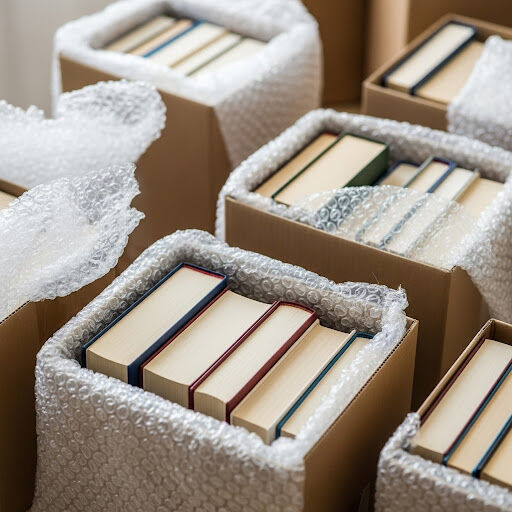
Use tape that sticks well. Choose packing paper for wrap. For rare books, acid-free paper is best. Bubble wrap adds cushion for heavy or fragile sets.
Have tools ready to fill gaps. Foam sheets, cardboard dividers, and soft cloths work well. Silica gel packs help control moisture for long moves.
- Small book boxes, 12 to 16 inches long
- Heavy-duty tape and a tape gun
- Packing paper and optional acid-free paper
- Bubble wrap for fragile or large books
- Silica gel packs for humid routes
- Markers, labels, and a box scale
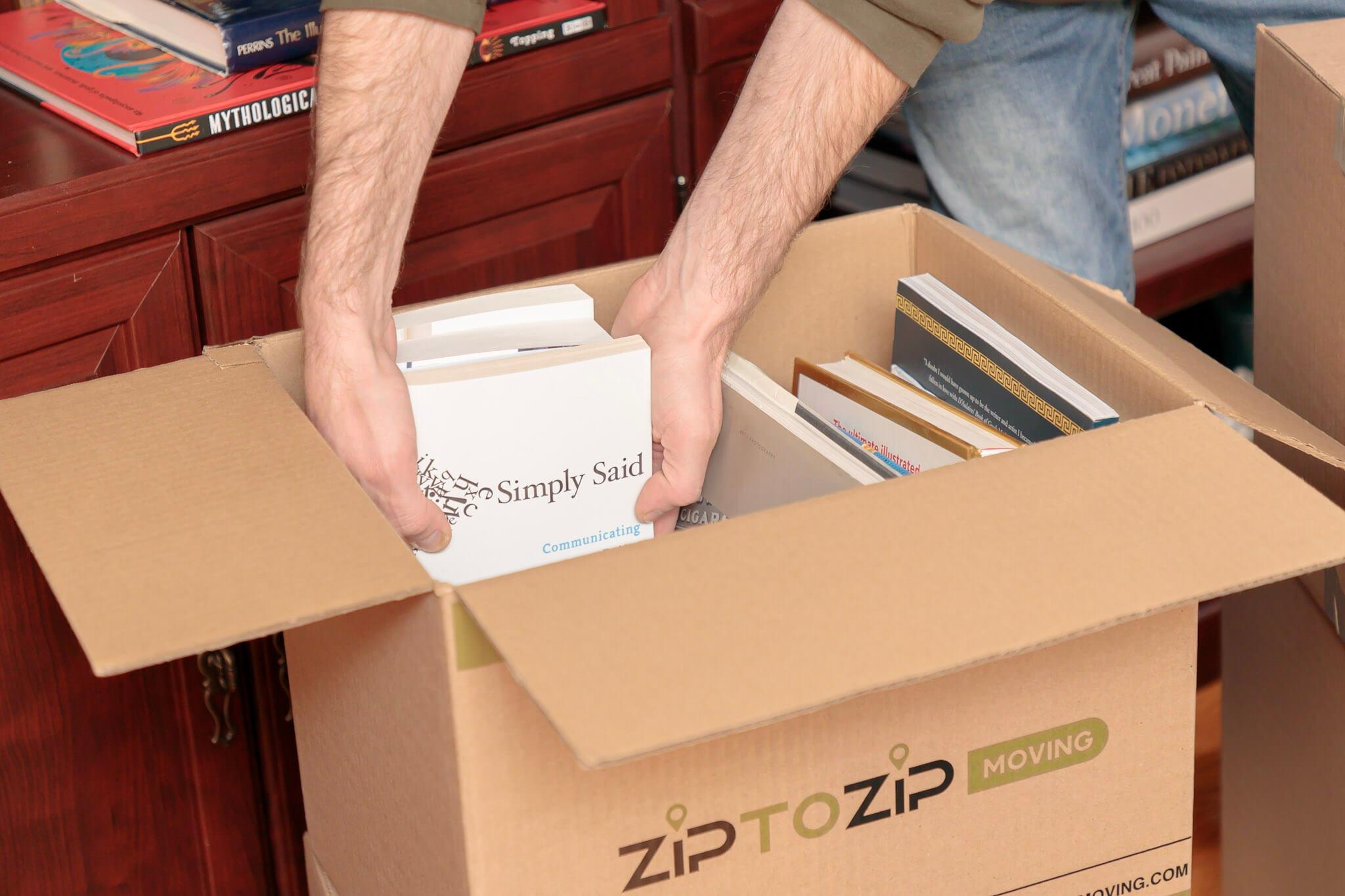
Step-by-step: how to pack books for moving
This method is safe and fast. It works for most homes and most moves. It is also easy to teach to helpers.
- Build the box and tape the bottom with two full strips, plus one cross strip.
- Line the bottom with a layer of paper or a thin foam sheet.
- Load heavy books first. Pack books flat or spine-down to protect pages and joints.
- Fill edge gaps with small paperbacks to prevent shifting.
- Keep weight under 40 to 50 pounds per box to avoid injury and box failure.
- Add a final layer of paper on top. This absorbs shock and keeps dust out.
- Seal with two strips of tape and one cross strip. Label on two sides and the top.
Pack by book type for best protection
Different books need different care. A bit of planning here prevents loss. It also makes unpacking easy.
Hardcovers and trade paperbacks need strong support. Pack flat or with spines down and pages facing up. Do not pack spine up. That can stress the book block.
Delicate or rare books need wraps. Use acid-free paper and a snug fit. Add corner guards for very sharp dust jackets. Place a “Fragile: Books” label.
Oversized art or photo books should go flat. Use a flat sheet of cardboard between each to avoid scuff marks. Wrap dust jackets with tissue or jacket covers.
Children’s books and board books pack well in small stacks. Keep sets together. Add a note on the box to make bedtime easy after the move.
Comics and magazines do best upright with boards and sleeves. Fill any gaps with foam so they do not slump. Keep away from heat and sun.
Choose smart boxes, manage weight, and label well
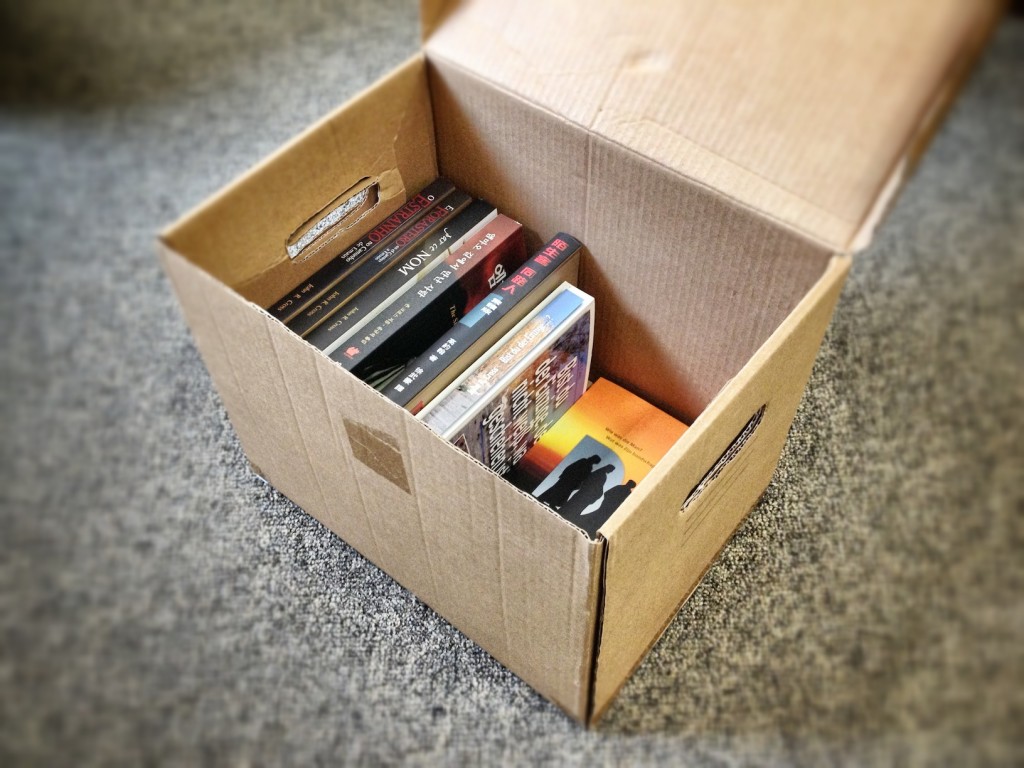
Small boxes protect your back and your books. Most moving pros set a 50-pound limit per box. I aim for 40 pounds, which keeps stacks safe and easy to lift. If a box bowes when lifted, repack.
Label each box on two sides and the top. Use room, category, and a short note. Add sequence numbers so you can track count and progress. This also helps when boxes go into storage.
Keep like items in the same boxes. Match by room or shelf. Mixed boxes take longer to unpack and can lead to damage as you dig.
- Use small, double-wall boxes for dense loads.
- Keep one or two “display” boxes separate for special titles.
- Color code labels by room for fast unloading.

Protect against moisture, pests, and climate
Moisture is the top risk for paper. Line the box base with paper and add a silica gel pack for long or humid routes. Never pack damp books. Dry them first with airflow and paper inserts.
Avoid plastic wrap that traps moisture. If rain is likely, use plastic bins for top layers or cover stacks on the truck. Store books off concrete floors to prevent wicking.
Pests can hitch a ride in used boxes. Inspect boxes and books. A fast flip-through and a tap on the spine help. Keep food away from book boxes at all times.
- Use silica gel packs for long-haul moves.
- Avoid basements and attics during storage.
- Let cold books warm up sealed before opening to reduce warping.
Load, transport, and unpack with care
Load book boxes low and toward the front of the truck. This lowers the center of gravity and reduces sliding. Strap tall stacks to prevent a topple. Keep heavy against the wall.
Do not stack more than three heavy boxes high. Add a soft pad or blanket between stacks if needed. Place fragile or rare book boxes on top of heavy stacks, never below.
Unpack room by room. Open the “open first” box early to make the space feel like home. For climate shifts, let sealed boxes sit for a few hours before opening, so paper adjusts.

Common mistakes to avoid and pro tips from the field
Do not use huge boxes for books. They fail and cause injuries. Avoid newspaper as wrap for book covers. Ink can transfer and stain jackets.
Do not pack books with spine up. That strains the binding and can split glue lines. Do not leave voids. Empty space leads to crushed corners.
From my moves, rolling suitcases with hard shells are great for books. They handle weight and roll well. I also keep a floor scale by the door. It stops overpacking before the box leaves the room.
- Pre-cut paper sheets to speed the wrap.
- Use cardboard shims to level uneven stacks.
- Keep a spare marker in each room.
- Photograph rare books before packing for records.
Save money and stay eco-friendly
Re-use boxes that are clean and strong. Liquor or copy-paper boxes work great and are small. Check that the bottoms are solid. Add extra tape if unsure.
Use towels or soft tees as gap fillers. They cushion and save on packing paper. Avoid overusing plastic. Paper can be recycled and is safer for pages.
Borrow or rent plastic crates for short local moves. They stack well and close tight. Return them after and reduce waste.
- Ask local stores for small, sturdy boxes.
- Use old magazines as layer pads between books.
- Donate extra packing paper to a neighbor after the move.

A simple timeline and checklist
A plan keeps stress low. Start two weeks out for larger homes. Small apartments can finish in a week. Pace matters more than speed.
Two weeks before:
- Sort and declutter by shelf.
- Buy or gather supplies.
- Pack rare and oversized items first.
One week before:
- Pack least-used shelves.
- Weigh boxes to keep under 40 to 50 pounds.
- Label by room and category.
Two days before:
- Pack daily reads and kids’ books.
- Make an “open first” box.
- Stage boxes near the exit path.
Move day:
- Load books low and forward.
- Keep rare boxes on top.
- Cover stacks if rain threatens.
Frequently Asked Questions of how to pack books for moving
What is the best way to pack heavy books?
Use small, sturdy boxes and keep each under 40 to 50 pounds. Pack books flat or spine-down, and fill gaps so nothing shifts.
Should I use bubble wrap or paper for wrapping books?
Use packing paper for most books and bubble wrap for very fragile or oversized volumes. For collectible books, choose acid-free paper to protect covers and pages.
Can I use suitcases for packing books?
Yes, hard-shell rolling suitcases are great for heavy loads. They roll well and reduce lifting strain, but do not overfill them.
How do I protect books from moisture during a move?
Keep books dry before packing and add silica gel packs for long or humid routes. Avoid plastic that seals in moisture, and store boxes off concrete floors.
Is it safe to use used boxes for books?
Yes, if they are clean, dry, and strong. Reinforce the bottom with extra tape and avoid any box that shows bowing or tears.
Conclusion
You now know how to pack books for moving with safe methods, smart gear, and a calm plan. Keep boxes small, stacks tight, and labels clear. Treat rare books with added care, and keep weight in check to protect both spines and backs.
Put these steps into action on your next shelf today. Build one box, then another, and the task will shrink fast. Want more moving tips and checklists? Subscribe for future guides, or leave a comment with your biggest packing challenge.