

Crossword puzzles bring a satisfying pause to your day and give your mind a gentle workout. Yet dense grids and unfamiliar clues can frustrate new solvers, while phone apps often add screen time and distractions instead of a quiet paper puzzle.
For a friendlier start, a beginner crossword puzzle book offers clues and grids designed to build confidence step by step. You can work at your own pace, learn common clue patterns, and check answers when a puzzle leaves you stuck.
Many books include large-print grids for easier reading, themed clues that make solving more approachable, and answer keys that help you understand tricky solutions. Short puzzles also fit a coffee break or a calm evening, so practice feels manageable.
Books vary in puzzle difficulty, print size, and the number of clues, so choose based on your comfort and how often you plan to solve. Explore the best crossword puzzle books for beginners below and find a welcoming place to start.
7 Best Crossword Puzzle Books for Beginners Reviews

1.Majosta Crossword Puzzle Books, 100 Puzzles
100 big-font puzzles offer eye-friendly challenges to boost your focus

2.Crossword Puzzle Books, 100 Easy Puzzles
100 relaxing large-print puzzles help keep your mind active each day

3.St. Martin's Griffin Medium Crossword Puzzles
200 medium puzzles offer a satisfying challenge for crossword fans
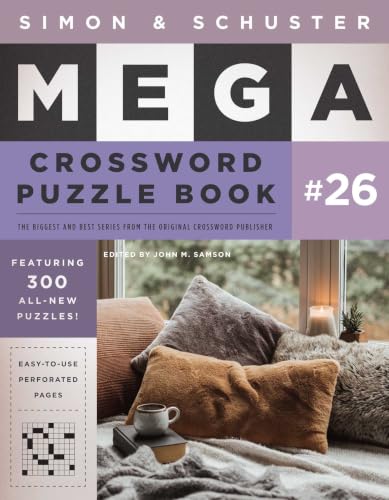
4.Gallery Books Crossword Puzzle Books #26
Mega crossword puzzles offer a large collection of clues to solve

5.St. Martin's Griffin Monday Crossword Puzzles
100 easy Monday puzzles offer familiar New York Times crossword fun

6.Crossword Puzzle Books, 90 Simple Puzzles
90 simple large-print puzzles include answers for relaxed solving

7.St. Martin's Griffin Simply Easy Crosswords
Easy puzzles offer an inviting way to enjoy New York Times crosswords
1. Majosta Crossword Puzzle Books, 100 Puzzles
Majosta makes crossword practice approachable with a book of 100 puzzles for adults and seniors. The large-print format gives beginners a more comfortable way to read clues and write answers as they learn how crosswords work.
Its eye-friendly pages may suit readers who prefer larger text for puzzle solving. With 100 puzzles in one book, beginners have a series of challenges to work through at their own pace, whether they want a short activity or a longer session.
The book measures 11 inches tall and 8.5 inches across, giving the puzzles room on the page. Its slim, 0.27-inch profile also makes it easy to keep with other books or set aside between sessions.
Majosta describes the puzzles as a way to build focus, which may appeal to readers looking for a screen-free activity that exercises attention. The title also positions the book for adults and seniors, so it could suit a beginner choosing puzzles for personal use or as a gift.
This book best suits adults and seniors who want large-print crossword practice and a collection of 100 puzzles to explore at their own pace. Its appeal rests on the puzzle count and readable format rather than stated difficulty levels or extra features.
- 100 big-font puzzles are easier to read
- Eye-friendly format suits adult and senior solvers
- Easy puzzles offer approachable solving challenges
- No major cons
2. Crossword Puzzle Books, 100 Easy Puzzles
For adults and seniors starting with crosswords, this book offers 100 puzzles in large print. Its beginner-friendly focus gives new solvers a collection to work through, while the larger text is suited to readers who prefer more legible word games.
The book’s 100 puzzles provide variety without requiring you to find separate activities each time. You can use them for a short word-game break or spend longer working through a puzzle at your own pace.
Large print makes the clues and puzzle grids easier to read than smaller text may be, which can be useful during longer solving sessions. The title also presents the puzzles as relaxing games for keeping your mind active.
At 11 inches tall, the book has a page format that gives its puzzles room to occupy. Its slim profile measures about a quarter inch wide, so it can fit among other books when you store it.
The listing supplies little detail beyond the puzzle count, large-print format and intended audience, so buyers won’t know the exact difficulty range or puzzle layouts before purchase. It suits adults and seniors who want a beginner-oriented crossword book with larger print and 100 puzzles.
- 100 easy puzzles offer plenty of beginner-friendly practice
- Large print makes clues easier to read
- 8.5-by-11-inch pages provide a roomy format
- No major cons
3. St. Martin’s Griffin Medium Crossword Puzzles
200 medium puzzles give beginners plenty of practice with a consistent level of challenge. The New York Times Strictly Medium Crossword Puzzles Volume 1 is a fit for solvers ready to move beyond easy clues but not looking for the hardest puzzles.
The book focuses on medium crosswords, so it offers a clear step up for newcomers building their solving skills. Its 200 puzzles also give you a range of chances to practice without needing to choose a new book right away.
At about 6 by 9 inches, it has a compact paperback-style format that’s easy to hold or bring along. The listed weight is about 0.6 pounds, so it won’t add much to a bag.
The title identifies the puzzles as New York Times crosswords, with this volume collecting 200 of them at medium difficulty. That makes it most suitable for beginners who already feel comfortable with simpler puzzles and want a more demanding routine.
There are no details provided about hints, answers, or puzzle themes, so buyers looking for those features may want to check the book before purchasing. It suits newer solvers who want a substantial set of medium-level puzzles for regular practice.
- Includes 200 puzzles for extended practice
- Medium difficulty helps build solving skills
- Compact format is easy to carry
- Medium puzzles may challenge absolute beginners
4. Gallery Books Crossword Puzzle Books #26
Crossword fans who want a large collection of puzzles get that in the Simon & Schuster Mega Crossword Puzzle Book #26. Its title identifies it as a mega puzzle book, giving beginners plenty of crossword material to work through.
This is the 26th book in the numbered series, which can help readers who want to explore more volumes later. The listing does not specify puzzle count, difficulty levels or hints, so beginners should check the book’s contents if those details matter to them.
The book weighs about 1.7 pounds, so it is manageable to carry between home, school or a trip. Its size is about 8.5 by 10.9 inches, giving it a substantial page format for writing answers.
No information describes the paper, binding or answer key, so those details remain unclear from the listing. Beginners who prefer guided clues or a range of difficulty settings may want to confirm that the book suits their learning style.
With its large puzzle-book format and place in an established series, it suits beginners ready to practice crosswords on paper and readers looking for a substantial collection.
- Mega crossword book for extended puzzle practice
- Part of a numbered series for further reading
- Manageable 1.7-pound weight for carrying
- Listing gives no puzzle count or difficulty range
5. St. Martin’s Griffin Monday Crossword Puzzles
For a living room coffee table or a bedside reading spot, this New York Times collection offers 100 easy Monday crossword puzzles. Their beginner-friendly level gives new solvers a steady place to start and plenty of chances to practice.
The Monday puzzles make this book a gentler entry point than collections that focus on harder challenges. You can work through them at your own pace, learning how clues are worded and building confidence as you fill in each grid.
With 100 puzzles in one volume, there’s room to return to the book over time. The collection suits short puzzle breaks, or longer sessions when you want to tackle several clues in a row.
The book weighs about 2.3 pounds, so it’s substantial to hold during a long solving session. Its listed size is about 9 inches tall, making it a book-format option for a table, desk or bookshelf.
The product details don’t specify paper type, print size, an answer section or hints, so buyers who need those features may want to check before choosing it. Its focus on easy Monday puzzles makes it a practical pick for beginners who want a sizeable collection with a consistent starting level.
- Includes 100 easy puzzles for beginner practice
- Monday difficulty offers a gentler starting point
- One book provides puzzles for many sessions
- Weighs about 2.3 pounds for a puzzle book
6. Crossword Puzzle Books, 90 Simple Puzzles
Large print is a useful feature for beginners who want an easier-to-read puzzle book. This edition includes 90 simple crosswords, giving new solvers a collection to work through at their own pace.
The puzzles suit adults and seniors, and their simple level offers a starting point for people learning how crossword clues work. You can focus on one puzzle at a time without needing advanced solving experience.
Answers come with the puzzles, so you can check your work when you finish or get stuck. That makes it easier to learn from unfamiliar clues and keep moving through the book.
Crosswords also give readers a way to practice memory, focus and vocabulary, as the title notes. The book’s large-print format supports reading the clues and filling in answers without dealing with small type.
At 11 inches tall and 8.5 inches deep, the book has room for its large-print format. Its stated width is just 0.25 inches, making it a slim volume to store with other books.
This is a straightforward choice for adults and seniors who want simple crosswords, readable print and included answers as they build confidence with puzzles.
- 90 simple crosswords offer an easy start for beginners
- Large print makes clues easier to read
- Answers are included for checking completed puzzles
- No major cons
7. St. Martin’s Griffin Simply Easy Crosswords
St. Martin’s Griffin publishes the New York Times Simply Easy Crossword Puzzles for readers starting out with crosswords. Its title points to a beginner-friendly focus, making it a book to consider for people who want to work through easy puzzles.
The book’s compact paperback-sized format measures about 9.2 inches tall, so it can fit on a desk or travel with other reading materials. At about 0.6 pounds, it is light enough to carry for a puzzle break away from home.
Crossword puzzles give beginners a way to practice interpreting clues and filling a grid one answer at a time. The word “Simply” and “Easy” in the title indicate that this collection aims at a less demanding starting point than books aimed at experienced solvers.
The title identifies the puzzles with The New York Times, a recognizable name for crossword fans. That makes the book an option for new solvers who want a themed collection rather than a general activity book.
Its slim shape takes little shelf space and can fit in a bag alongside a notebook or other small items. The listing does not give a puzzle count or specific difficulty range, so buyers who want those details may need to check the book before choosing it.
For beginners seeking a lightweight collection with an easy-puzzle focus, this book is a practical place to start. Its small format also suits readers who want to solve at home or take a puzzle along.
- Beginner-focused title offers an easy starting point
- Lightweight at about 0.6 pounds for carrying
- Slim format fits easily on shelves or in bags
- No major cons
How to Choose the Best Crossword Puzzle Books for Beginners
For a first crossword book, the right fit depends on how much help you want, how large the print needs to be, and how quickly you want puzzles to become harder. Check the puzzle level, layout, answers, book size, and price before choosing.
| If You Need | Look For | Expect |
|---|---|---|
| An easy first puzzle | Beginner or easy clues | Less challenge as skills grow |
| Easier reading | Large print and open grids | A larger, heavier book |
| A portable book | Smaller trim size and low weight | Smaller clues and writing spaces |
| Practice over time | More puzzles per book | More pages to carry |
| Help after getting stuck | Answers in the book | Less room for uninterrupted solving |
| A gradual challenge | Clear difficulty labels | Harder puzzles may still frustrate |
| A lower-cost option | Simple paperback, fewer extras | Fewer puzzles or less guidance |
Difficulty Level
Difficulty is the first thing to match to your experience, because a book that feels too hard can make solving frustrating. Look for “easy,” “beginner,” or a clearly explained level rather than relying on a title alone.
Some collections use a known progression, while others describe puzzles as simple or relaxing. For a first purchase, choose a consistent easy level; experienced word-game players might prefer medium puzzles for more challenge.
Clue style also shapes difficulty: general knowledge, wordplay, abbreviations, and cultural references each ask for different skills. If you are new to crosswords, familiar everyday clues and straightforward wording help you learn how answers fit the grid.
A book with one difficulty throughout gives you a steady routine, while a range of levels offers room to progress. Choose a consistent level for confidence-building, or mixed levels if you already enjoy solving and want variety.
Print And Grid Layout
Large print helps if standard-sized clues are tiring to read, especially during longer sessions. Look for a clear statement about larger type, and consider whether the puzzle grid and clue list are both easy to see.
The grid needs enough space for you to write comfortably, not just read the clues. Larger-format books often allow bigger squares, while compact books are easier to carry but may feel cramped for handwriting.
Look at page design as well as font size. Clues placed close to their grids reduce page-turning, while a crowded page or small margins can make it harder to follow a clue and record an answer.
Answers And Hints
Answers help you move forward when a puzzle stalls, and they let you learn from unfamiliar clues. Before buying, see whether solutions are included and whether they appear after each puzzle or in a separate section.
A separate answer section helps avoid seeing solutions too soon, but it takes more page-turning. Answers beside puzzles are quicker to consult, though they can spoil clues if you glance at the next page accidentally.
Beginners who want to solve independently may prefer answers collected at the back. If you are using puzzles for casual practice or shared sessions, easy-to-find solutions can make the book less frustrating.
Puzzle Count And Variety
The puzzle count tells you how long the book may last, but it does not reveal how much variety each puzzle offers. Compare the number of puzzles with the listed difficulty and whether the collection follows a consistent style.
A higher count usually means more solving for the purchase price, but it can also mean a thicker book. A smaller collection may suit a short trial, while a larger one works better for regular use.
Check whether a book offers a specific level or a broader mix. A focused collection makes it easier to build confidence at one pace; varied puzzles suit people who want changing themes or a gradual step up.
Book Size And Weight
Book dimensions affect where and how comfortably you solve. A larger page often gives clues and grids more room, while a smaller paperback fits more easily in a bag or on a crowded table.
Weight matters if you plan to carry the book on a commute, trip, or visit. A light book is easier to hold for a long session, while a heavier collection may be better left at home.
Thickness and page size also affect writing comfort. If you use large handwriting or solve with a pencil, look for roomy grids; if portability matters most, accept smaller squares and bring a fine-point pen.
Paper And Writing Space
Paper that takes pencil marks clearly makes it easier to fill and revise answers. Product details do not always describe paper quality, so look for interior previews or buyer photos that show the page surface and grid size.
Thin paper can let writing show through from the reverse, which may distract you from the next puzzle. If you erase often, a book with opaque pages and enough space around each grid is a safer choice.
Some solvers prefer pen, while others need to erase guesses as clues become clearer. For flexible solving, choose pages that appear suitable for pencil and avoid assuming every crossword book has the same paper or grid dimensions.
Puzzle Sources And Clue Style
Collections from established puzzle publishers may follow familiar conventions, but the clue style still varies. Look for sample pages or descriptions that show whether clues rely on general knowledge, wordplay, names, or current references.
A “Monday” label in a weekday-based series commonly signals an easier point in that series, though it does not promise that every clue will feel simple. If you are new, sample a few clues before choosing a themed collection.
Repeated clue patterns can help you learn common crossword wording over time. A book with a consistent style suits skill-building, while a collection from different sources may introduce more varied clue approaches.
Price And Value
At a lower price, expect a straightforward paperback with fewer puzzles, simpler presentation, or limited guidance. This can be a sensible starting point if you are unsure how often you will solve or which difficulty suits you.
A higher price is worthwhile when it buys something you will use, such as more puzzles, larger print, or a format that is easier to handle. Compare cost with puzzle count and your preferred page layout, not price alone.
Bulkier books may offer many puzzles but are less convenient to carry, while compact books may cost more per puzzle. Choose based on where you solve and how long you expect the collection to last.
Matching The Book To Your Routine
Think about where you will solve most often: at home, on the go, alone, or with someone else. A large page suits a table and relaxed sessions, while a lighter book is easier to take along.
For short daily practice, a consistent easy level and quick access to answers can keep each session manageable. If you want a longer-term challenge, a larger collection or a modest difficulty increase gives you more room to grow.
If the book is a gift, consider the reader’s eyesight, handwriting, and familiarity with crosswords before focusing on puzzle count. A comfortable format and suitable clue level are more useful than a large collection that feels difficult to use.
Frequently Asked Questions
Are any of these crossword puzzle books electronic or do they need batteries?
These are printed puzzle books, so they don’t need batteries or another power source.
What should a beginner look for in a crossword book?
Look for easy puzzles and a print size that feels comfortable to read. Majosta Crossword Puzzle Books, 100 Puzzles and Crossword Puzzle Books, 100 Easy Puzzles both feature large print and 100 puzzles.
What comes in the Crossword Puzzle Books, 90 Simple Puzzles?
It includes 90 simple large-print puzzles and answers, making it a convenient choice if you want solutions included.
Should I choose St. Martin’s Griffin Monday Crossword Puzzles or St. Martin’s Griffin Simply Easy Crosswords?
Both offer easy New York Times crossword fun. Choose Monday Crossword Puzzles for 100 familiar Monday puzzles, or Simply Easy Crosswords if you’re looking for an easy introduction without a stated puzzle count.
Is St. Martin’s Griffin Medium Crossword Puzzles suitable for a complete beginner?
Its 200 puzzles are medium difficulty, so it may suit beginners who want more of a challenge than easy puzzles.
How can I choose between a smaller puzzle collection and a larger one?
Compare the listed puzzle counts and difficulty: Crossword Puzzle Books, 90 Simple Puzzles has 90 simple puzzles, while Gallery Books Crossword Puzzle Books #26 offers a mega collection of clues.
So, What Should You Buy?
For most beginners, St. Martin’s Griffin Monday Crossword Puzzles is the best pick, with 100 easy puzzles and familiar New York Times crossword fun. On a budget, consider Crossword Puzzle Books, 90 Simple Puzzles; its large print and included answers make relaxed solving straightforward.
Choose Majosta Crossword Puzzle Books for 100 big-font challenges, or St. Martin’s Griffin Medium Crossword Puzzles if you’re ready for more difficulty. For a larger collection, try Gallery Books Crossword Puzzle Books #26; for an easy New York Times option, choose Simply Easy Crosswords. Pick the puzzle book that fits your pace.