

Most Latter-day Saint scholars say Moroni authored the Title Page, translated from the last leaf.
If you have wondered who wrote the title page to the Book of Mormon, you are not alone. This question opens a door to manuscripts, witness accounts, and careful textual clues.
In this guide, I bring years of research and practical study to explain who wrote the title page to the Book of Mormon, why it matters, and how you can check the evidence yourself.

The short answer and why it matters
Joseph Smith said the Title Page was a literal translation from the very last leaf of the plates. The text of that page says the record was sealed by the hand of Moroni. For this reason, many conclude that Moroni wrote it and Joseph Smith translated it.
Knowing who wrote the title page to the Book of Mormon matters for two reasons. First, it sets the claim that the book is an ancient record.
Second, it frames the book’s purpose in clear terms: to show the remnant of the house of Israel what God has done, and to convince all that Jesus is the Christ. When people ask who wrote the title page to the Book of Mormon, they are really asking whether the book’s own front matter is ancient or modern.

What primary sources say?
Primary sources help answer who wrote the title page to the Book of Mormon. Joseph Smith stated that the Title Page came from the last leaf of the plates and that it was not his modern composition.
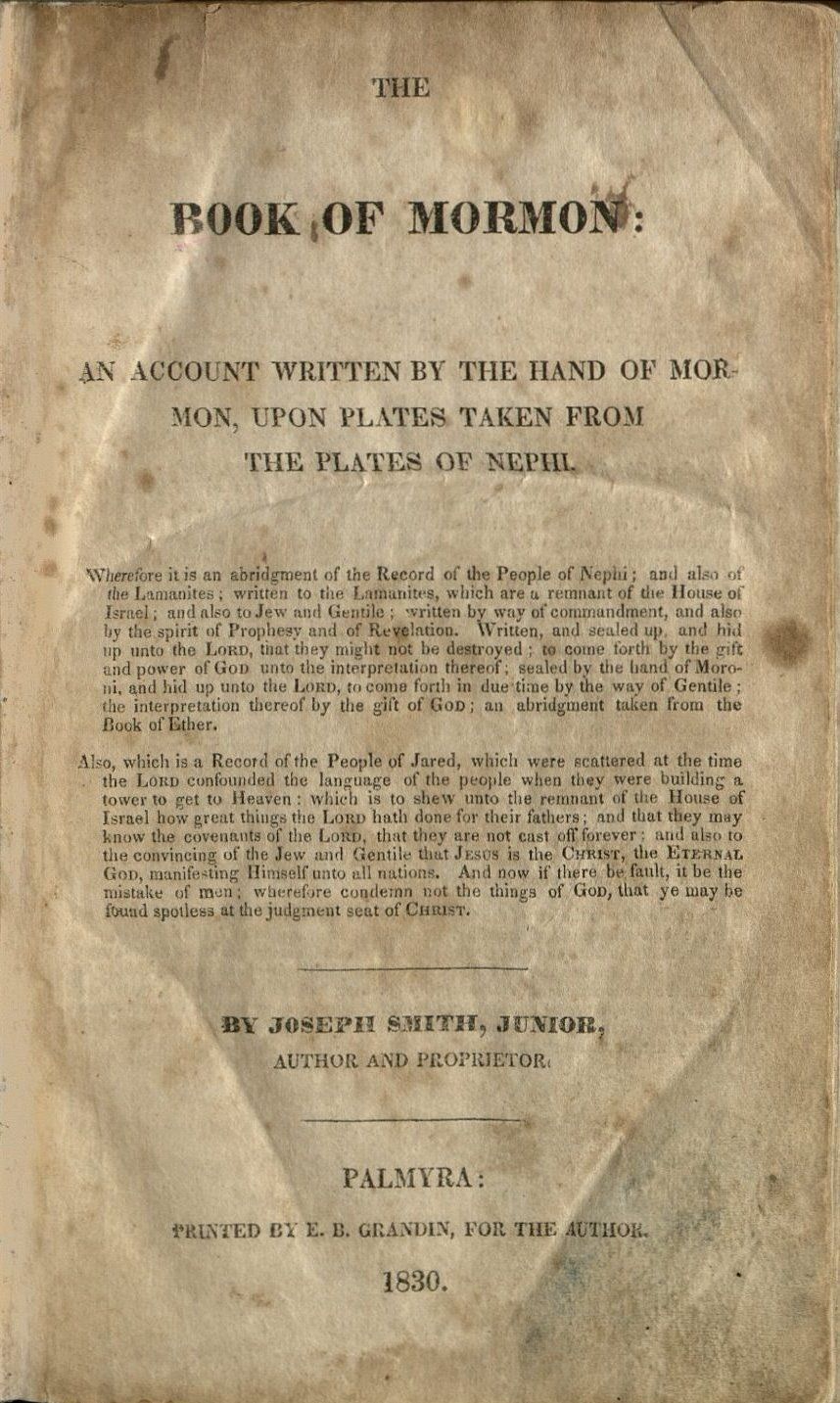
The earliest printing also preserves a title page that includes phrases about sealing and coming forth by the power of God. The 1830 edition adds a legal line that reads Author and Proprietor after Joseph Smith’s name.
That legal phrase came from copyright law and does not mean he wrote the ancient Title Page. These early sources are key when people ask who wrote the title page to the Book of Mormon.
The internal text: Moroni or Mormon?
Scholars read the Title Page itself for clues. Two names often come up: Moroni and Mormon.
Key clues in the text
- It describes an abridgment by Mormon and a record of the people of Jared.
- It says the record was sealed by the hand of Moroni and hid up unto the Lord.
- It states its purpose: to show what God has done and to convince Jew and Gentile that Jesus is the Christ.
How experts weigh the clues
- Moroni view: Since the page mentions sealing by Moroni and came from the last leaf, many read it as Moroni’s colophon. This view is common among Latter-day Saint historians.
- Mormon view: A few suggest Mormon wrote most of the Title Page, and Moroni later added the sealing line. This keeps Mormon as the main compiler but gives Moroni the final act.
Both views accept Joseph Smith’s claim that he translated the Title Page from the plates. Where they differ is on which ancient prophet wrote it. This is the heart of who wrote the title page to the Book of Mormon.
Transmission and editorial notes across editions
If you compare editions, you will see small shifts in punctuation, capitalization, and layout. These do not change the core claims. The Title Page still presents the same purpose and the same note about sealing and coming forth by the power of God.
A common point of confusion is the placement of Translated by Joseph Smith. That line signals the translation claim, not authorship of the ancient text.
Some readers mix the legal Author and Proprietor line from 1830 with authorship. This is where study can clear up who wrote the title page to the Book of Mormon and who translated it.

How to study this question yourself?
You can test the evidence and reach a steady view. Here is a simple path I use when readers ask who wrote the title page to the Book of Mormon.
- Read the Title Page in the earliest edition you can access. Note every reference to sealing, authorship, and purpose.
- Compare the 1830 edition with a current edition. Watch for any wording that shifts meaning. Most do not.
- Review Joseph Smith’s statement that the Title Page was a literal translation from the last leaf. This anchors the claim.
- Check the printer’s manuscript images if possible. Seeing how the text appeared to the printer is helpful.
- Separate legal language from translation claims. Author and Proprietor is a copyright term, not the name of the ancient author.
If you follow these steps, you will be ready to answer who wrote the title page to the Book of Mormon with calm and clarity.
What I learned while researching
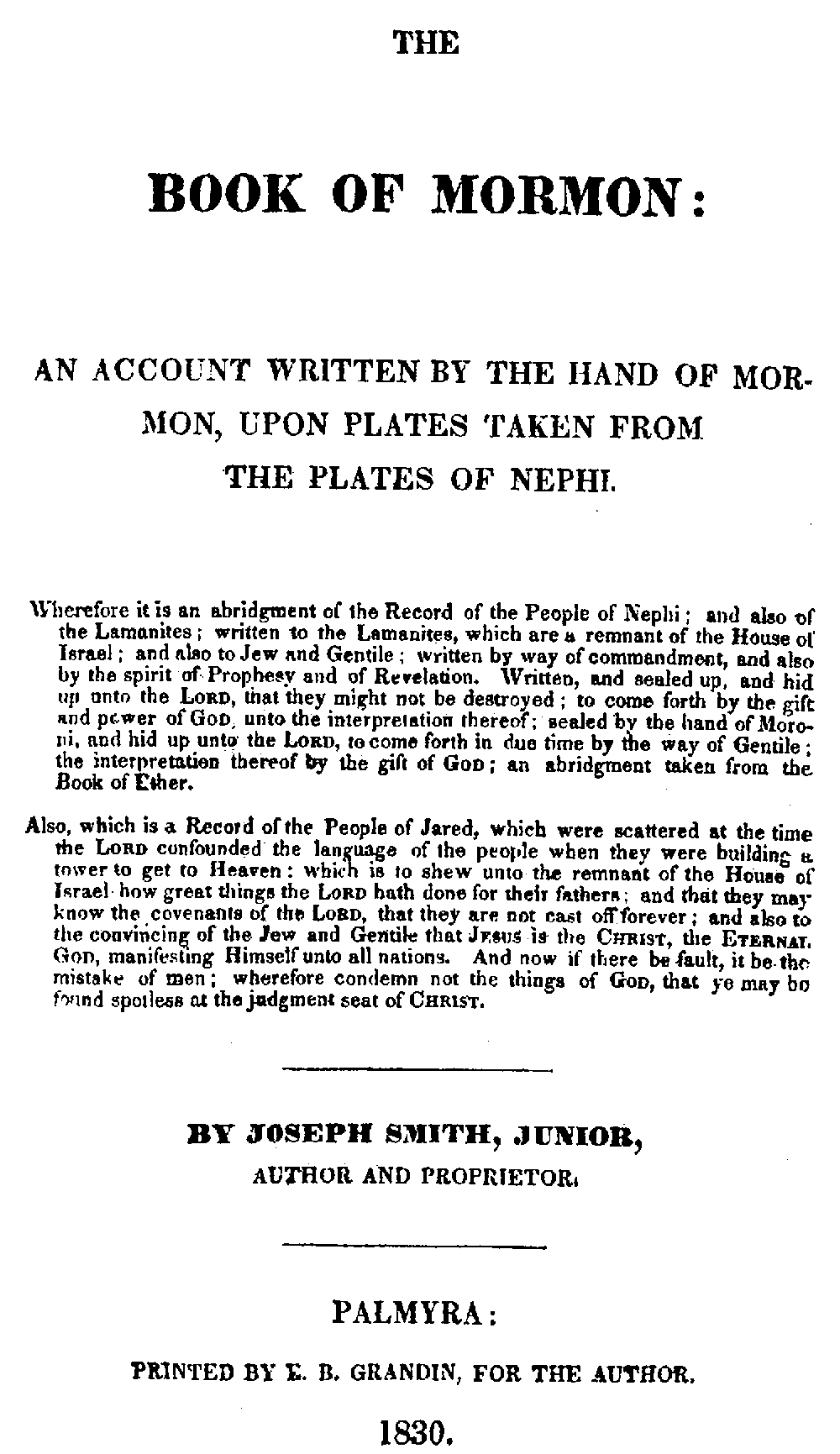
When I first compared the 1830 Title Page to a modern edition, the phrase sealed by the hand of Moroni stood out. It felt like a signature without a signature.
I then noted Joseph Smith’s claim about the last leaf. That match between internal text and an external statement made the Moroni view compelling.
I have also seen people confuse the copyright line with authorship. It is an easy mistake. Once I showed side-by-side images and explained the legal context, the confusion cleared fast. This is why I stress the difference when talking about who wrote the title page to the Book of Mormon.

Common misconceptions and clear answers
Many readers ask who wrote the title page to the Book of Mormon because they hear mixed claims online. Here are frequent misunderstandings and simple fixes.
- Joseph Smith wrote the ancient Title Page: He translated it. The legal line Author and Proprietor does not mean ancient authorship.
- There is no ancient author named: The text itself points to Moroni’s sealing role. Some still see Mormon’s hand in the main wording, but both views are ancient.
- Later edits changed the core claim: Editorial updates have been light. The meaning stays the same across editions.
- The Title Page was a marketing add-on: The claim that it came from the last leaf runs against that idea. The wording reads like an ancient colophon, not modern copy.
These points help keep the focus on sources and text. They also keep the answer to who wrote the title page to the Book of Mormon grounded and simple.
Frequently Asked Questions of who wrote the title page to the book of mormon
Did Joseph Smith write the Title Page?
He said he translated it from the last leaf of the plates. The legal Author and Proprietor line reflects copyright practice, not ancient authorship.
Does the Title Page name its ancient author?
It states the record was sealed by the hand of Moroni. Many conclude Moroni wrote it, though some argue Mormon composed most of it.
Why do some think Mormon wrote it?
The page summarizes Mormon’s abridgment. Some see that as Mormon’s voice with Moroni adding the sealing note.
What evidence supports Moroni as author?
The internal phrase sealed by the hand of Moroni and the placement on the last leaf. Together they align with Moroni’s known role.
How does this affect faith claims?
If the Title Page is ancient, it supports the book’s own claims. It also frames the purpose to witness of Christ and gather Israel.
Where can I verify the wording?
Check images of early editions and the printer’s manuscript. You can also review Joseph Smith’s statement about the last leaf.
Conclusion
The simplest reading of the evidence points to Moroni as the ancient author of the Title Page, with Joseph Smith as its translator.
The internal wording, the note about sealing, and the claim of a last-leaf translation work together. This is why many scholars answer Moroni when asked who wrote the title page to the Book of Mormon.
You can test this for yourself. Compare editions, read the statements, and note the legal language. Then share what you find, explore more resources, or leave a comment with your take.