

Clear briefs, contracts, and memos are essential tools for a successful career in the legal field. Dense phrasing and archaic terms often cloud your message, though, so readers and clients frequently struggle to understand your true meaning. Standard dictionaries and basic grammar manuals rarely explain how to structure arguments or simplify complex rules.
Books about legal writing solve these exact problems. They teach you how to organize complex statutes, eliminate wordy phrases, and build persuasive arguments that persuade judges and clients with ease.
Many titles offer real-world examples, step-by-step editing exercises, and practical templates for everyday briefs and contracts. Clear prose takes the place of confusing legalese, making every document easier to draft.
Authors vary in teaching style, focus areas, and level of detail, so your choice depends on your specific career stage and writing goals. Compare the best legal writing books below to find the right guide for your desk.
8 Best Legal Writing Books Reviews

1.University of Chicago Legal Writing Book
Plain English guide helps writers master clear and effective prose

2.Oxford University Press Point Taken Book
Proven judicial writing techniques show how to craft persuasive briefs

3.University of California Legal Writing Book
Concise principles elevate everyday legal writing into fine literature

4.The Complete Legal Writing Handbook
Thirty eight rules and fifty common errors guide students and lawyers

5.Aspen Publishers Legal Writing Book
Techniques and technology upgrade skills with a connected study center

6.CREATESPACE The Tools of Argument Book
Analytical frameworks teach lawyers how to think argue and win cases
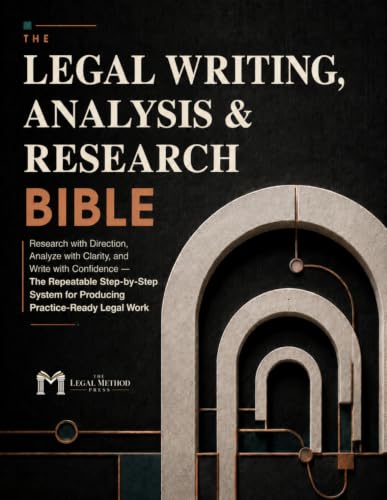
7.The Legal Writing Analysis Research Bible
Repeatable step by step system produces practice ready legal work

8.QuickStudy Legal Writing Reference Guide
Laminated reference sheet provides quick answers for legal writers
1. University of Chicago Legal Writing Book
Legal Writing in Plain English, Third Edition helps lawyers and students make their documents clear and direct. This updated text guides readers through the process of organizing arguments and cleaning up tangled sentences.
Practical exercises fill the pages, giving you hands-on practice with real legal documents. Each chapter focuses on a specific writing problem, showing how to replace dense legalese with plain words.
The book breaks down complex rules into simple steps, making daily drafting much easier. You can apply these lessons to contracts, briefs, memos, and court filings to reach any reader.
University of Chicago Press publishes this edition, which includes fresh exercises for modern practice. The physical book weighs about two pounds and measures nearly nine inches in height.
Students and practicing lawyers who want to sharpen their professional voice can rely on these expert tips. Anyone handling legal documents needs this guide to write with confidence and save time.
- Includes practical exercises for practice
- Offers clear steps for legal drafting
- Covers modern writing techniques
- Heavy to carry in a bag
- No major cons
2. Oxford University Press Point Taken Book
For writing persuasive briefs and crafting clear judicial opinions, Point Taken teaches lawyers and students how to communicate legal ideas effectively. The book focuses on practical methods used by top judges to make complex arguments sound simple and direct.
Written by Ross Guberman, the guide draws on examples from real court documents and opinions. You can learn how to structure sentences, choose strong verbs and avoid common traps that weaken legal writing.
The softcover edition weighs about one pound, making it easy to carry in a backpack or brief bag to class or court. Its compact layout fits nicely on a desk alongside casebooks and research notes.
Every chapter covers a specific skill, from framing the issue to polishing the final conclusion. Real judicial writing provides concrete lessons for readers at any stage of their legal career.
Clear explanations help you apply these principles to your own memos and motions right away. Law students, practicing attorneys and judges find plenty of useful advice inside these pages.
- Teaches clear legal writing methods
- Uses real examples from court opinions
- Written by author Ross Guberman
- Compact softcover format for travel
- Weighs about one pound
3. University of California Legal Writing Book
About 0.7 pounds of focused instruction on clear drafting fills this guide from the University of California Press. It teaches lawyers and students how to strip away confusing jargon and build direct sentences. Every chapter shows you methods to replace wordy phrases with sharp arguments that judges and clients can read fast.
Clear structure rules help organize briefs and memos so the main point stands out immediately. You learn techniques to prune extra words and let important facts carry the weight of your case. Real examples prove how plain language makes briefs persuasive and simple to follow during oral arguments.
Legal professionals can apply these lessons to routine letters, complex motions and long appellate briefs alike. The advice covers grammar habits that slow down readers and gives rules to fix common drafting errors. You also get tips on tone so your writing sounds professional without hiding behind stuffy terminology.
This book fits nicely into briefcases or desk drawers while you edit important court documents. Busy attorneys and law students who want better persuasion skills can rely on its practical exercises. Anyone writing legal briefs will find useful advice on every page to speed up document reviews.
- Teaches plain drafting for briefs
- Clear structure rules for memos
- Compact size fits inside bags
- No major cons
4. The Complete Legal Writing Handbook
Law students and attorneys looking to sharpen their written briefs and memos get thirty-eight distinct rules and fifty common errors to avoid with The Complete Legal Writing Handbook. This reference guide covers grammar, terminology, style, and logic for everyday drafting.
Practice-area guides give readers targeted direction for specific types of legal documents. Clear explanations help you fix mistakes before submission.
Each chapter breaks down complex sentence structures into manageable parts. Writers can easily spot phrasing problems in briefs, contracts, and legal correspondence.
The compact size makes it simple to carry in a backpack or brief bag. Studying grammar rules on the go becomes straightforward during busy semesters.
Every practicing lawyer and future attorney needs reliable tools for drafting precise documents. This manual suits professionals aiming for clear communication.
- Covers 38 legal writing rules
- Details 50 common errors
- Includes practice-area guides
- Compact size might feel small
- No major cons
5. Aspen Publishers Legal Writing Book
For busy offices and quiet study desks, this guide helps lawyers and students refine their written work. Level Up Your Legal Writing teaches modern techniques and uses technology to supercharge writing skills. Every chapter covers ways to make briefs, memos and research papers clear and persuasive.
Aspen Publishers created this Aspen Coursebook to help writers communicate complex legal arguments. You get access to a Connected eBook with Study Center for online reading, review tools and practice materials. These digital resources let you test your knowledge and study cases from any computer or mobile device.
The book measures about 7 inches deep, 1.2 inches wide and 10 inches high for easy storage on bookshelves or desks. Softcover pages hold detailed chapters on structuring documents, editing drafts and using modern writing tools. Students can carry the text in a backpack between classes and law offices.
Weighing about 1.6 pounds, the volume stays light enough to hold during long reading sessions. Aspiring lawyers and practicing attorneys can use these methods to build stronger arguments and clear briefs. This legal guide suits law students and professionals who want to improve their everyday writing.
- Includes Connected eBook with Study Center
- Deep chapters on legal writing techniques
- Portable size for backpacks and briefcases
- Lightweight build for long reading hours
- Paperback binding can wear over time
6. CREATESPACE The Tools of Argument Book
The real name of its main feature, legal argument methods, helps this book teach readers how to win disputes through structured logic. This volume by CREATESPACE breaks down complex persuasion techniques used by top advocates in courtrooms and negotiations.
You can study foundational reasoning strategies that apply to everyday debates, contract discussions, and public speaking events. Each chapter guides students and professionals through classical rhetoric tools designed to dismantle opponent claims effectively.
Clear explanations show how to structure a strong position without relying on emotional appeals or biased language. Aspiring lawyers and seasoned advocates alike gain a reliable resource for sharpening critical thinking skills during high-stakes preparation.
Weighing about zero point seven pounds, the paperback edition travels easily inside a backpack or briefcase for daily study sessions. It measures about six inches wide, half an inch thick, and nine inches tall for comfortable reading at a desk.
Readers looking to improve persuasive writing and oral advocacy will find practical value in these pages. This guide suits law students, practicing attorneys, and anyone needing sharp analytical methods for professional communication.
- Teaches proven legal argument methods
- Compact paperback size for easy travel
- Written for law students and lawyers
- Clear reasoning and rhetoric tools
- No major cons
7. The Legal Writing Analysis Research Bible
The Legal Writing, Analysis & Research Bible gives you a reliable method for building solid legal documents from start to finish. This comprehensive guide details a repeatable step-by-step system for producing practice-ready legal work.
You learn how to research with direction, analyze complex problems with clarity and write with confidence every time. The manual breaks down each phase of the process so your briefs and memos meet professional standards.
Clear instructions help you gather relevant authorities and structure your arguments without unnecessary guesswork. Each chapter focuses on practical techniques for turning raw research into persuasive writing for courts and clients.
Students and junior attorneys use this system to organize authority and draft documents efficiently during busy workdays. Experienced practitioners also consult the book to refine their drafting habits and mentor new staff members.
This resource suits law students, clerks and practicing lawyers who want to sharpen their legal drafting and research skills.
- Teaches a repeatable step-by-step system
- Guides research with clear direction
- Improves analysis for legal work
- Boosts confidence in legal writing
- No major cons
8. QuickStudy Legal Writing Reference Guide
With laminated pages and a compact reference format, the QuickStudy guide brings essential legal writing rules to students, paralegals and attorneys. This handy legal writing reference guide condenses complex principles into a clear, easy-to-read layout for quick study sessions and daily office tasks.
Clear charts and tables break down rules of grammar, citation formats and document structures so you can draft briefs, memos and court filings with confidence. Law students preparing for exams and legal professionals polishing their courtroom arguments will find every section straightforward and accessible.
The laminated coating protects the paper from coffee spills, folded corners and daily backpack wear during commutes between classes and law firms. You can wipe the surface clean after heavy use, keeping the printed text legible over years of study.
Three-hole punched edges let you snap this reference sheet straight into a standard binder alongside your case briefs, class notes and client files. It sits flat on a crowded desk or library table, staying out of the way while you type out long legal documents.
Last but not least, this durable study aid weighs about two pounds, light enough to carry anywhere you need quick legal answers. It suits busy students, law clerks and practicing attorneys who need reliable writing help close at hand.
- Laminated pages resist spills and tears
- Punched holes fit standard binders
- Clear charts for rules and citations
- Lightweight format for easy travel
- Weighs over two pounds
How to Choose the Best Legal Writing Books
Choosing the right legal writing guide directly impacts your daily drafting speed and professional credibility. Your final decision depends on your current career stage, preferred learning format, specific courtroom goals, and budget constraints.
| If You Need | Look For | Expect |
|---|---|---|
| Quick desk reference | Laminated quick charts | Less deep analysis |
| Judicial perspective | Judge writing examples | Fewer basic grammar drills |
| Practice-ready steps | Repeatable research systems | Higher upfront cost |
| Law school prep | Structured textbook exercises | Heavier physical weight |
| Logic training | Argument breakdown tools | Dense reading material |
| Digital access | Connected online portals | Subscription renewals |
Target Audience Level
Matching a book to your current profession ensures you avoid basic primers when you need advanced litigation tactics. Law students require foundational grammar rules, whereas practicing attorneys benefit more from persuasive judicial styling and brief-building frameworks.
Writing Focus Area
Different manuals prioritize distinct phases of the drafting process, ranging from initial citation research to final sentence polish. Select volumes targeting logic and argument structure if your main weakness lies in building convincing legal reasoning.
Digital Versus Print Format
Physical textbooks offer distraction-free reading, while digital editions provide searchable text and interactive study centers for remote learners. Portable laminated reference sheets fit easily inside a briefcase for fast courtroom or classroom lookups.
Practical Exercises and Practice Guides
Interactive learning tools transform passive reading into active skill-building through targeted writing drills and editing assignments. Bulleted error lists and practice-area guides help you spot common drafting mistakes before filing documents with courts.
Physical Dimensions and Weight
Heavy hardcover editions stay permanently on office desks, while lightweight paperback manuals travel comfortably in daily commuter bags. Larger page dimensions often provide wider margins for note-taking during intensive study sessions.
Author Background and Perspective
Guides written by sitting judges reveal insider insights into what persuasive language actually sways judicial opinions. Academic professors author comprehensive coursebooks that systematically cover exhaustive research methodologies for complex legal problems.
Price and Value
Low-cost laminated guides cost under twenty dollars, offering instant access to basic rules without extensive reading. Comprehensive textbooks and digital course bundles cost significantly more, providing structured semester-long curricula and online study centers.
Warranty and Return Policies
Printed books usually carry standard retail return windows if the physical binding arrives damaged or defective. Digital access codes have strict activation policies, meaning you cannot easily return them once you unlock the online platform.
Frequently Asked Questions
Are all of these reviewed products traditional bound books?
While most choices are full books, the QuickStudy Legal Writing Reference Guide is a laminated reference sheet designed for quick answers.
What are the main materials used for these publications?
These products are printed publications featuring standard paper pages and soft or hardcover bindings, except for the QuickStudy Legal Writing Reference Guide, which uses a durable laminated material.
What additional learning aids come in the box with these texts?
While most options are standalone reading materials, the Aspen Publishers Legal Writing Book includes access to a connected study center.
Should I get the University of Chicago Legal Writing Book or the University of California Legal Writing Book?
The University of Chicago Legal Writing Book focuses on a plain English guide for clear prose, whereas the University of California Legal Writing Book relies on concise principles to elevate everyday writing into fine literature.
How do I handle persuasive brief writing using these options?
To craft persuasive briefs, you can utilize the Oxford University Press Point Taken Book, which provides proven judicial writing techniques.
What is the best way to learn how to structure arguments to win cases?
You can use CREATESPACE The Tools of Argument Book, which provides analytical frameworks to teach lawyers how to think, argue, and win cases.
So, What Should You Buy?
For most readers, the University of Chicago Legal Writing Book is the best overall pick for mastering clear prose. Budget-conscious writers will find the QuickStudy Legal Writing Reference Guide ideal, while those seeking judicial persuasion should choose Oxford University Press Point Taken.
Students wanting a comprehensive manual should grab The Complete Legal Writing Handbook. Choose the model that fits your needs and start improving your legal writing today.