

Farming books bring practical knowledge and fresh ideas to your garden, smallholding, or working farm. Without a trusted guide, it can be hard to plan crops, care for soil, raise animals, or make sense of conflicting tips from scattered online sources.
A well-chosen farming book gives you clear guidance you can revisit at your own pace. Unlike short web posts, many books explain methods in context, helping you connect everyday tasks with seasonal planning, land care, and long-term farm goals.
Some titles focus on organic growing, livestock, or homesteading, while others offer diagrams, planting calendars, and step-by-step advice. These features help you build skills, troubleshoot common challenges, and adapt techniques to your space and experience.
Books vary in scope, reading level, and farming method, so consider what you want to learn and how you plan to use it. Explore the best farming books below to find a useful guide for your next step.
7 Best Farming Books Reviews
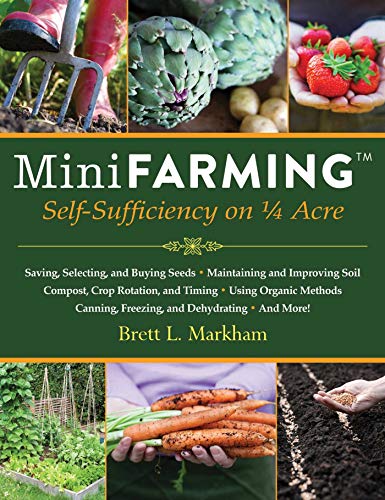
1.Skyhorse Mini Farming on 1/4 Acre
Practical guidance helps you pursue self-sufficiency on a quarter acre

2.Sasquatch Books Country Living Encyclopedia
A 50th anniversary guide to living off the land and doing it yourself

3.Penguin Random House You Can Farm Guide
Guidance to start and succeed in a farming enterprise of your own

4.New Society Publishers The Market Gardener
A successful grower's handbook for small-scale organic farming

5.New Society Publishers The Farmer's Office
Tools and templates help you start, manage and grow a farm business

6.Workman Publishing Small-Scale Livestock
A grass-based approach promotes health and sustainability in livestock

7.First Generation Farming Agribusiness Guide
Cooperative agribusiness planning helps keep you farming for
1. Skyhorse Mini Farming on 1/4 Acre
Mini Farming: Self-Sufficiency on 1/4 Acre focuses on growing food and building self-sufficiency on a quarter-acre plot. Its small-scale focus gives readers a defined amount of land to consider as they explore ways to farm for themselves.
The title makes the book a fit for readers who want to learn about farming on a limited plot rather than a larger property. It centers the subject on a quarter acre, a useful scale for planning what a small farm might involve.
The book comes in an illustrated format, so readers get illustrations alongside its farming content. That format can make it easier to follow ideas on the page while reading, though the product details do not specify which topics or techniques the book covers.
At about 2.7 pounds, it has some heft for a book that readers may want to carry between rooms or take along while planning a garden. Its listed dimensions are about 8.5 by 11 inches, giving it a page size suited to reading and viewing illustrations.
The available product information does not list a page count, specific crops, or individual farming methods, so buyers looking for those details may want to check the book’s contents before choosing it. The book suits readers interested in small-scale farming and self-sufficiency on a quarter acre.
- Focuses on self-sufficiency on a quarter acre
- Illustrated format accompanies the farming content
- Large page format supports reading illustrations
- No major cons
2. Sasquatch Books Country Living Encyclopedia
For readers interested in living off the land, *The Encyclopedia of Country Living* offers a broad guide to homesteading and doing things yourself. This 50th anniversary edition is framed as a manual for off-grid living, making it a book to consider for readers exploring practical country skills.
The title also points to its focus on self-sufficient living rather than farming alone. Readers comparing farming books should note that the book covers the wider subject of living off the land, along with homesteading and off-grid survival.
This is an illustrated edition, which adds visual material to its written format. Its 50th anniversary designation also makes the edition easy to distinguish from earlier versions of the book.
At about 4.3 pounds, it is a substantial book to hold or carry, so it may work better as a home reference than a light book for travel. Its white color and roughly 10.8-inch height give it a noticeable physical presence on a shelf.
The available details do not list specific farming topics or individual instructions, so buyers seeking guidance on a particular skill may want to check the contents before choosing it. It suits readers looking for an illustrated, wide-ranging introduction to country living and self-reliance.
- 50th anniversary edition of a classic homesteading manual
- Covers off-grid living and do-it-yourself skills
- Illustrated format helps bring topics to life
- No major cons
3. Penguin Random House You Can Farm Guide
1.2 inches thick, this Penguin Random House book offers a guide to starting and running a farming enterprise. Its title points to readers who want to approach farming as a business, rather than only learn about growing crops or raising animals.
The book’s focus on entrepreneurship makes it relevant to people considering a farm business or looking to build one. The supplied details do not describe its specific topics, so readers who need guidance on particular farming methods may want to check the contents before buying.
This is a used copy listed in good condition. That gives buyers a lower-cost format to consider, though the listing does not specify the book’s edition or describe any wear beyond its condition label.
At about 2.3 pounds, it is substantial for an 8.9-inch-tall book, so it may be more comfortable to read at a desk than to carry around all day. Its multicolor cover adds a visual detail, but the listing gives no further information about the cover or interior.
Readers seeking a book centered on the business side of farming may find its subject a useful starting point. It suits aspiring farm entrepreneurs who want a dedicated guide to starting and succeeding in a farming enterprise.
- Focuses on starting and succeeding in a farm business
- Entrepreneurial guidance is useful for aspiring farmers
- Compact 6-by-9-inch size is easy to handle
- No major cons
4. New Society Publishers The Market Gardener
Small-scale growers who want to farm organically get a handbook focused on their kind of operation in The Market Gardener. Its title points to practical guidance for building and running a small farm, rather than advice aimed at large-scale agriculture.
The book’s subject makes it relevant to people planning an organic growing operation or looking for ways to manage one. Readers can use a handbook format to work through farming topics as they plan tasks, make decisions and develop their approach over time.
Its focus on small-scale organic farming helps narrow the subject for buyers choosing among farming books. The title also identifies the book as a grower’s handbook, so it is aimed at people interested in the work of growing and managing crops.
At about 1.1 pounds, it is light enough to carry between a desk, a planning space and the growing operation. Its roughly 8.5-inch square format gives it a compact footprint for a bookshelf or work surface.
The Amazon details do not provide a page count, publication date or specific topics covered, so buyers may want to check those details before choosing it for a particular farming question. This book suits aspiring and current small-scale growers who want a handbook centered on organic farming.
- Focuses on small-scale organic farming
- Handbook format for growers' planning
- Weighs about 1.1 pounds for carrying
- Compact 8.5-inch square book format
- No major cons
5. New Society Publishers The Farmer’s Office
For farm offices handling records, plans and business decisions, this book offers tools and guidance for starting, managing and growing a farm business. Its second edition is aimed at readers who want practical support for the business side of farming.
The title points to a mix of tools, templates and skills rather than a guide focused only on growing crops or raising livestock. That makes it relevant to people setting up a farm business as well as those looking to manage an existing operation.
Readers can use the book’s templates and tools as part of organizing farm work and business tasks. The title does not specify particular topics or template types, so buyers looking for coverage of a specific area may want to check the contents before choosing it.
At about 1.4 pounds, the book is manageable to carry between home, office and farm. Its roughly 8.9-inch height gives it a compact book format that can fit with other reference materials.
For readers building business skills alongside their farming knowledge, this second edition centers on the practical work of running an operation. It suits aspiring and current farmers who want a resource on farm management and business planning.
- Practical tools and templates for farm business management
- Covers starting, managing, and growing a farm business
- Second edition offers an updated reference for farm owners
- No major cons
6. Workman Publishing Small-Scale Livestock
Grass-based livestock farming is the subject of this Workman Publishing book, which looks at small-scale production through the linked aims of animal health, sustainability and profit. It may suit readers who want a farming guide centered on pasture-based methods rather than large-scale operations.
The title points to three concerns for farmers: keeping livestock healthy, managing a sustainable farm and making the business profitable. Together, those themes make the book relevant to readers weighing both practical farm decisions and the long-term effects of their approach.
Its focus on small-scale operations may be useful to people planning a modest farm or refining an existing one. The grass-based approach gives the book a specific subject, while its attention to health and sustainability connects livestock care with how the farm is run.
The available product details do not list particular livestock species, farming techniques or financial examples. Readers looking for guidance on a specific animal or step-by-step instructions may want to check the book’s contents before buying.
The cover is blue, and the book weighs about 1.4 pounds. Its listed size is about 11 inches tall, making the format easy to compare with other farming books or consider for shelf space.
Overall, this book suits aspiring and small-scale farmers interested in grass-based livestock production, especially those who want to consider animal health, sustainability and profit together.
- Focuses on health, sustainability, and profit
- Grass-based approach gives the book a clear focus
- Addresses farming on a small scale
- Product details list no specific farming techniques
7. First Generation Farming Agribusiness Guide
First Generation Farming focuses on coordinated, cooperative agribusiness and how it can help farming families stay on the land across generations. As the final choice in this roundup, it speaks to readers interested in the organization and cooperation behind a lasting farm business.
The title frames the book as a blueprint, with cooperation and coordination at its center. That focus may suit readers who want to think beyond day-to-day farm work and consider how agricultural businesses can work together.
Its subject also connects farm management with the long-term question of keeping land in the family or community. Readers looking for ideas about agribusiness structures may find that emphasis more relevant than a book centered on crop techniques alone.
The book measures 9 inches tall and 6 inches across, with a listed thickness of 0.39 inches. That compact format is easy to store on a shelf or carry alongside other reading.
The available product details do not name specific chapters, farming methods, or business arrangements, so buyers should not expect those topics to be confirmed from the listing alone. Its stated focus is broad: coordinated, cooperative agribusiness and remaining on the land for generations.
This book suits farmers, farm families, and readers exploring cooperative approaches to agribusiness. It is most relevant for someone considering the long view of farm ownership and business coordination, rather than seeking a detailed guide to a particular production method.
- Centers cooperative agribusiness and coordination
- Focuses on keeping farms on the land for generations
- Listing gives no chapter or method details
How to Choose the Best Farming Books
The right farming book depends on what you want to grow, where you plan to sell, and how much experience you have; subject, scale, format, and price all affect whether its guidance fits your plans.
| If You Need | Look For | Expect |
|---|---|---|
| A small home plot | Compact-acreage growing advice | Less room for crop variety |
| Farm business planning | Budgets, templates, and marketing | More focus on paperwork |
| Livestock guidance | Species and grazing coverage | Less detail on crop production |
| Homesteading skills | Broad self-sufficiency topics | Less depth on one task |
| Organic market growing | Crop planning and sales advice | More labor and recordkeeping |
| Cooperative farming | Shared ownership and coordination | More group decision-making |
Match The Subject
Start with your goal, because a farming book aimed at small-plot self-sufficiency will answer different questions from one about selling crops or managing a farm business. Choose the subject that matches your next real decision.
For household food production, look for advice on garden layout, succession planting, soil care, and preserving harvests. If income is the goal, prioritize enterprise planning, pricing, sales channels, and cash flow instead.
Livestock readers should look for material on animal health, feed, pasture, and handling, while aspiring market growers need crop planning and customer guidance. Broad homesteading coverage suits readers exploring several skills, but may offer less depth on each.
Match The Scale
The acreage or operation size behind a book’s advice affects how useful its plans will be, because land, labor, and equipment needs change as a farm grows. Look for examples close to your available space.
A small plot guide should address efficient beds, crop rotation, and realistic household yields; large-field methods may assume machinery and more land. For a commercial farm, seek guidance on labor, production volume, and sales.
Livestock advice also depends on scale and grazing area, since stocking rates and daily care differ between a few animals and a larger herd. Compare the stated approach with your land, time, and local conditions.
Choose The Right Level
A beginner benefits from clear explanations of basic terms, practical sequences, and examples that start with planning rather than assuming an established farm. Experienced growers may prefer detailed methods, business decisions, or specialized production guidance.
Look for a contents page or sample pages to see whether topics move from fundamentals to action. A book that assumes you know soil tests, bookkeeping, or animal care may leave a new farmer filling gaps elsewhere.
If you are still choosing a farm direction, broad coverage can help you understand the options, but it may not resolve technical questions. Once you know your goal, a focused guide often offers more usable detail.
Assess Practical Detail
A useful farming book turns ideas into steps you can apply, so look for checklists, diagrams, sample schedules, calculations, or templates where they suit the topic. These tools reduce guesswork when planning tasks or costs.
For growing advice, look for planting calendars, bed layouts, crop spacing, and harvest guidance; local climate still affects timing. For livestock, seek clear care routines and health guidance rather than broad claims about sustainability or profit.
Business-focused readers should look for budgets, recordkeeping examples, pricing methods, and marketing plans. Templates save setup time, but they still need adapting to your local rules, customers, land, and available cash.
Check Location And Climate
Farming advice is shaped by climate, soil, water access, growing season, and local regulations, so a method that works in one region may need adjustment elsewhere. Look for guidance that explains the reasons behind each practice.
For crop books, see whether planting dates and varieties are tied to a particular climate or presented as examples. Your local extension service or experienced growers can help adapt general advice to your area.
Livestock readers should also consider local forage, winter conditions, and animal health requirements. A book can explain a system, but it cannot replace region-specific veterinary advice or current rules for selling food.
Consider The Farming Approach
Methods such as organic growing, grass-based livestock, off-grid living, or cooperative business each involve different costs and commitments. Choose a book whose stated approach fits your values and practical limits, not just its broad promise.
Organic methods may require more hand labor, crop monitoring, and careful soil management, while grass-based livestock depends on suitable pasture and grazing plans. Compare the approach with your land, labor, and access to supplies.
Cooperative farming adds shared planning, responsibilities, and decision-making, so look for discussion of governance and coordination. If you intend to operate alone, that material may be less immediately relevant than individual business guidance.
Pick A Usable Format
Illustrations, diagrams, and page layout affect how quickly you can find and understand instructions, especially when a topic involves layouts, tools, or processes. Browse sample pages for readable type and clear visuals.
A large, illustrated reference may be easier to consult at a desk, but it takes more space and is less convenient to carry around. A lighter, smaller book suits travel or field notes better.
Also consider whether you prefer a book to read in order or a reference to revisit by topic. A strong index and contents page help you locate specific tasks without rereading whole chapters.
Check Edition And Condition
An edition date matters when guidance depends on changing markets, regulations, or business practices, while core growing and animal-care principles often change more slowly. Look for an edition that suits the decisions you face.
Used copies cost less, but inspect the listing for missing pages, markings, damaged bindings, or an outdated edition. A workbook or template-heavy book is less useful if important pages are filled in or absent.
For new or used copies, confirm the format and contents before ordering. A revised edition may include updated material, while an older copy can still suit readers seeking foundational knowledge.
Set A Realistic Budget
Farming books range from concise, focused guides to larger references with broad coverage, illustrations, or reusable planning tools. Pay more when the added detail serves a task you expect to undertake.
A lower-priced book suits readers testing an interest or seeking one narrow topic, while a broader handbook may reduce the need to buy several introductions. Compare useful coverage rather than page count alone.
For a farm business, practical templates or current planning advice can justify extra cost if they support real decisions. Avoid paying for broad subject coverage when you need specific guidance for one crop, animal, or enterprise.
Frequently Asked Questions
Which book is best for learning to become more self-sufficient on a small plot?
Skyhorse Mini Farming on 1/4 Acre focuses on practical guidance for pursuing self-sufficiency on a quarter acre.
Which book should I choose to learn about organic market gardening?
New Society Publishers The Market Gardener is geared toward small-scale organic farming and offers guidance from a successful grower.
Should I pick The Farmer’s Office or the Agribusiness Guide?
Choose The Farmer’s Office for tools and templates to start, manage, and grow a farm business. The Agribusiness Guide focuses on cooperative planning to help keep you farming.
What comes with The Farmer’s Office?
Its main feature is a set of tools and templates for farm-business planning and management; the provided details do not specify additional contents.
Which book covers livestock health and sustainability?
Workman Publishing Small-Scale Livestock takes a grass-based approach that promotes health and sustainability in livestock.
Which book is aimed at people starting a farming enterprise?
Penguin Random House You Can Farm Guide provides guidance for starting and succeeding with a farming enterprise of your own.
What kind of practical topics does the Country Living Encyclopedia cover?
Sasquatch Books Country Living Encyclopedia is a 50th anniversary guide to living off the land and doing it yourself.
So, What Should You Buy?
For most readers, *Mini Farming on 1/4 Acre* is the best starting point, with practical advice for pursuing self-sufficiency on a small plot. Choose *The Market Gardener* for small-scale organic growing, or *You Can Farm* for guidance on launching a farming enterprise.
For a broader DIY reference, pick *Country Living Encyclopedia*; aspiring farm-business managers may prefer *The Farmer’s Office* or *Agribusiness Guide*. Choose *Small-Scale Livestock* for grass-based animal husbandry. Match your book to your goals, and get started with confidence.