

Educational books turn spare moments into chances to understand the world, build useful skills, and spark curiosity. Without a clear, engaging guide, you may rely on scattered web searches or short videos, which can leave complex topics harder to follow and knowledge difficult to revisit.
That learning feels more focused with an educational book. Its chapters explain ideas step by step, while examples and illustrations help you connect new facts to everyday life; you can pause, reread, and learn at your own pace.
Many books include diagrams that make abstract ideas easier to picture, activities that help you practice, and glossaries that clarify unfamiliar terms. Age-appropriate language and focused topics can also make learning more enjoyable for children and adults alike.
Educational books differ in subject, reading level, format, and depth, so choose what suits your interests and learning goals. Explore the best educational books below to find a guide that makes your next topic easier to explore.
8 Best Educational Books Reviews

1.National Geographic Kids Big Book of Why
Questions and answers about the world fuel curiosity in young kids

2.Wonder House My First Library 10-Book Boxset
Ten colorful board books create a first library for young children

3.PI Kids Baby Einstein 12-Book Library Set
First words, letters and counting introduce early learning concepts

4.National Geographic Kids Why? 1,111+ Answers
Over 1,111 answers help curious kids explore questions about the world

5.Elon Books What Should Darla Do? Choice Book
Darla's choices show kids how decisions can shape what happens next
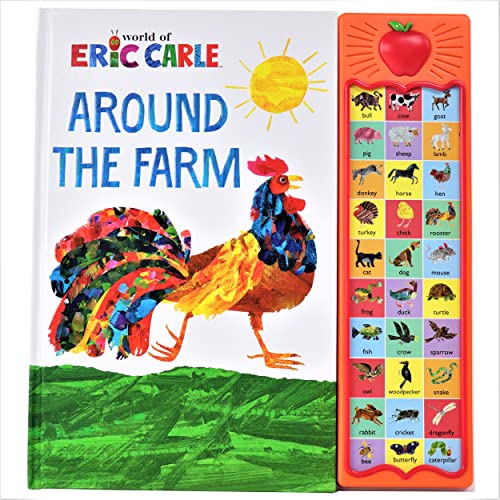
6.PI Kids Around the Farm 30-Button Sound Book
Thirty buttons let children hear animal names and sounds from the farm

7.DK Knowledge Encyclopedia! The World in View
Visual information helps readers explore the world in a new way

8.Penguin Random House Solar System Book
Learn about the solar system with this engaging guide to outer space
1. National Geographic Kids Big Book of Why
National Geographic Kids helps young children explore questions about the world through a picture-book format. This educational book presents questions and answers about the world, giving curious readers a way to learn about topics they want to understand.
The question-and-answer approach suits children who often ask how things work or why they happen. Short answers can make it easier to focus on one question at a time, while the picture-book format gives young readers illustrations alongside the explanations.
Families can use it for shared reading, with an adult reading questions and answers aloud and children discussing what they notice. Older children who are beginning to read can also browse the pages and follow subjects that interest them.
Its broad world-focused subject matter gives children room to move between different questions rather than stick to a single topic. That can make it useful for casual browsing at home, as well as for reading together when a child brings up something they want to know.
The book weighs about 1.5 pounds, making it a substantial picture book to hold during reading time. Its multicolor presentation adds visual variety, while the square format gives illustrations and text room on each page.
National Geographic Kids’ book is best suited to curious young children who enjoy asking questions and looking at pictures as they learn. Buyers seeking an educational book built around world-related questions and answers may find its format a helpful fit for family reading.
- Answers questions about the world for kids
- Picture-book format pairs reading with images
- Broad topic invites curious browsing
- No major cons
2. Wonder House My First Library 10-Book Boxset
For young children building early reading habits, Wonder House’s My First Library offers 10 board books in one boxset. The sturdy board-book format suits small hands and gives kids a set of books to revisit as they become familiar with reading.
The set’s 10-book count is its main draw for families choosing educational books. Children can explore a collection rather than relying on a single title, while adults have several books ready for shared reading at home or on the go.
Board pages are easy for young readers to handle during story time. The compact books can fit into a small reading space, and their format gives children a chance to turn pages themselves as they follow along.
The books come in multicolor, adding varied visual elements to the set. That variety can make the collection more inviting to browse, while the boxset keeps the books together when reading time ends.
At about 1.8 pounds for the full set, it is light enough for an adult to carry between rooms or pack for a visit. The supplied details do not list the subjects, reading level or page count, so buyers may want to check those before choosing it for a specific learning goal.
This set suits families seeking a compact collection of board books for young children, especially those who want several titles available for regular shared reading.
- Includes 10 board books in one set
- Board-book format suits young readers
- Multicolor books add visual variety
- Set weighs about 1.8 pounds to carry
- No major cons
3. PI Kids Baby Einstein 12-Book Library Set
Twelve board books give young readers a compact introduction to first words, letters and counting. This Baby Einstein set focuses on early learning topics, so families can use the books to share simple concepts during reading time.
The 12-book format offers several subjects in one set, from early language to numbers. That variety gives caregivers different topics to explore with a child instead of relying on a single book.
Each book uses a picture-book format, which pairs the set’s learning themes with illustrations. The board-book style also suits shared reading with young children who are beginning to handle books themselves.
The books come together as a block set, making the collection easy to keep as one group between reading sessions. Its focus on first words, letters and counting makes it a useful option for families seeking an early-learning book set.
At about 2 pounds, the set is light enough to move between a reading spot and a shelf. The compact books suit families who want several basic learning topics gathered in a small collection.
This 12-book set suits caregivers looking for picture books that introduce early words, letters and counting through shared reading.
- Twelve books cover several early learning topics
- First words, letters and counting in one set
- Board-book format suits young readers
- No major cons
4. National Geographic Kids Why? 1,111+ Answers
Curious kids get more than 1,111 answers to questions about the world in National Geographic Kids Why? This educational book offers a broad range of answers for young readers who want to explore many subjects in one place.
The title’s question-and-answer format gives children a simple way to look up topics that catch their attention. They can dip into a question that interests them or read about different subjects as curiosity leads them.
With over 1,111 answers, the book brings plenty of material for repeated browsing. Its large page format gives questions and answers room on the page, while the multicolor presentation adds visual variety.
This book weighs about 2.7 pounds, so it is substantial for a child to carry around. Its broad question-based approach suits curious young readers and families looking for an educational book with many answers to explore.
- Over 1,111 answers give kids plenty to explore
- Broad question-and-answer format supports browsing
- Large pages provide room for reading
- At about 2.7 pounds, it may feel heavy to carry
5. Elon Books What Should Darla Do? Choice Book
At home or in a classroom, What Should Darla Do? gives young readers an educational book centered on the power to choose. The title also places it in The Power to Choose series, giving buyers those details when deciding whether it suits their child’s reading collection.
The available product information does not describe the story, its activities, the recommended age, or any learning goals. Buyers should check the book’s full description before choosing it for a particular age group, lesson, or reading level.
Its educational focus makes it a possible addition to a child’s book collection, but the supplied details do not explain what children will learn from Darla’s choices. That makes the title and series name the clearest clues for comparing it with other books.
The specifications list a weight of about 1 pound. That figure may help parents planning to carry it in a bag, though the listing does not say whether the book includes illustrations, discussion prompts, or activities.
The book’s listed dimensions are about 10 inches tall, with a depth of about 10 inches and a width of less than an inch. These details give shoppers a basic idea of its physical format and shelf space.
With little information about its contents, this book suits buyers drawn to its choice-focused title who can confirm that its reading level and lessons fit the child.
- Choice-focused title may prompt discussion
- Part of The Power to Choose series
- About 1 pound for carrying in a bag
- No major cons
6. PI Kids Around the Farm 30-Button Sound Book
Animal sounds give the Around the Farm book a hands-on way to introduce first words. Its 30 buttons each represent a different animal, giving children a sound to explore as they learn to connect animal names with the noises they make.
Pressing a button plays both the animal’s name and its associated sound. Children can listen to one animal at a time, then try another, making the book useful for early listening and word practice.
The illustrations come from Eric Carle, the children’s book creator named in the product information. His artwork accompanies the sound-button activities, bringing pictures and audio together in one book.
PI Kids recommends the sound book for children ages 3 and older. The format suits young readers who are starting to learn animal names, while the buttons let them take part by choosing which sound to hear.
At about 2.3 pounds, it is a substantial book for a child to handle, and its listed dimensions are about 11.6 inches tall. This educational book suits families looking for an interactive way to practice animal words and sounds with children ages 3 and up.
- 30 animal buttons pair names with sounds
- Buttons let children choose sounds to explore
- Eric Carle illustrations accompany the activities
- At about 2.3 pounds, it is fairly heavy for young children
7. DK Knowledge Encyclopedia! The World in View
DK’s Knowledge Encyclopedia! gives curious readers a visual introduction to the world around them. The title points to a broad educational reference, making it a book to explore for information across subjects rather than a guide to just one topic.
Its “World as You’ve Never Seen it Before” subtitle suggests an approach built around fresh ways of looking at familiar subjects. Readers can dip into the book when a question sparks their interest, or browse it to find topics they might not have sought out on their own.
That open-ended format can suit shared reading, too. A child and adult can look through the pages together, follow a subject of interest and use the book as a starting point for conversation or further learning.
The white edition weighs about 4.8 pounds, so it is substantial for a book and better suited to a shelf or table than to carrying around all day. Its roughly 12-inch height gives the book a larger-than-standard format, which may work well for reading at home.
The available product details do not identify specific subjects, illustrations, age guidance or reference features, so buyers looking for a particular topic should check the book’s contents before choosing it. It suits curious readers who want a broad educational book to browse at home.
- Broad world-focused subject invites exploration
- Nearly 12-inch-tall format suits table browsing
- About 4.8 pounds gives it a substantial book format
- No major cons
8. Penguin Random House Solar System Book
With picture-book format and a solar-system topic, There’s No Place Like Space! All About Our Solar System gives young readers an illustrated way to explore space. Its subject makes it a fit for children learning about the planets and the wider solar system.
The picture-book format suits shared reading, as well as children who are beginning to read on their own. Families can use it to introduce space as a topic or add a solar-system book to a child’s reading shelf.
Penguin Random House publishes this navy-colored book. It weighs about 2.3 pounds, so it is more suited to reading at home than carrying around for long stretches.
The listing does not provide details about the book’s page count, age range or specific topics, so buyers may want to check those points before choosing it. Its format and solar-system subject are the main details available.
For families seeking a picture book about space, this title offers a focused starting point for reading and conversation. It suits children interested in the solar system and adults looking for an educational book to share.
- Picture-book format suits shared reading
- Solar-system topic introduces space learning
- Focused subject can prompt family discussion
- No major cons
How to Choose the Best Educational Books
Choosing an educational book means matching its format and content to a learner’s age, interests, and attention span. The right choice also depends on whether you want independent reading, shared activities, durable pages, or a focused introduction to one topic.
| If You Need | Look For | Expect |
|---|---|---|
| Books for toddlers | Thick board pages, simple words | Heavier books, fewer details |
| Early learning basics | Letters, numbers, first words | Repetition, limited topic depth |
| Curious question-askers | Short questions and clear answers | Broad coverage, varied depth |
| One focused subject | A topic the child already likes | More detail, narrower scope |
| Interactive reading | Sound buttons or choice prompts | Batteries or adult guidance |
| A reference book | Contents, index, clear diagrams | Larger size, more shelf space |
Age And Reading Level
Start with the child’s age, but use reading ability and attention span as stronger guides. A young listener may enjoy pictures and short answers, while an early reader needs readable text and room to explore independently.
For toddlers and preschoolers, look for large images, familiar objects, repeated words, and brief pages. Board pages suit frequent handling, while longer explanations are better for children who already sit through shared reading.
Older children often want facts beyond basic labels, so look for explanations that introduce new ideas without relying on dense text. A book marked for a broad age range still needs a quick preview for vocabulary and complexity.
Learning Goal
Decide what you want the book to help a child learn before choosing a format. Early vocabulary, counting, science facts, decision-making, and general knowledge call for different content and different ways of presenting it.
For foundational skills, look for clear examples of letters, numbers, colors, or everyday words, with repetition that supports recall. A wide range of topics offers variety, but it may give less practice with any one skill.
If the goal is curiosity, question-and-answer pages can help a child follow an interest from one fact to another. For a school topic or hobby, a focused book usually gives more room to explain that subject.
Format And Interaction
Picture books work well for shared reading because illustrations give adults and children something to discuss. Check whether the pictures support the text or simply decorate it, especially when the book is meant to teach unfamiliar ideas.
Board books have thick pages that are easier for small hands to turn and harder to tear than ordinary paper pages. That sturdiness usually adds weight and limits how much text each page can hold.
Sound books and choice-based stories invite children to press, listen, or decide what happens next. These features add participation, but buttons can distract from reading, and a child may need an adult to explain the activity.
Accuracy And Depth
Educational content should explain ideas clearly and avoid presenting guesses as facts. For science, history, or nature topics, look for careful wording, labeled illustrations, and a publication date that helps you judge whether information needs updating.
A short fact book suits quick browsing, while a reference-style book gives more context and detail. Check the table of contents, sample pages, and index to see whether a child can find answers without reading the whole book.
More facts do not always mean better learning, since crowded pages can overwhelm younger readers. Choose a level of detail that matches the child’s interest, then consider whether the book offers examples that make unfamiliar ideas easier to understand.
Engagement And Readability
A child is more likely to return to a book that connects with a real interest, such as animals, space, or everyday choices. Clear illustrations and short sections help maintain attention, especially during shared reading.
Look for readable type, strong contrast, and a layout that leaves space around text. Small print and tightly packed information can frustrate a new reader, even when the topic itself is appealing.
For a child who likes to browse, varied questions or labeled pictures create natural starting points. A focused narrative may suit a child who prefers a story, but it offers fewer ways to dip in and out.
Durability And Handling
Consider where the book will be read and who will handle it. Board pages suit toddlers and travel, while paper pages often work better for older children who can turn them carefully.
Large, heavy books can be useful for shared reading at a table, but they are less convenient to carry or hold for long periods. Check the listed dimensions and weight against the child’s size and usual reading spot.
For books with buttons, inspect how the controls are arranged and whether small hands can reach them easily. Sound features add parts that need careful handling, so they may be less suitable for rough use.
Size And Portability
A compact book is easier to pack for a car ride, waiting room, or visit, while a large page gives illustrations more room. Choose based on where the child will use it most often.
Thicker sets and large reference books need more storage space, and a boxed collection may be awkward for small hands to carry. If portability matters, compare the total set weight with the size of a single book.
Price And Value
Lower-priced books often focus on one simple skill or offer basic pages, which can suit a first introduction. Sets cost more upfront, but several short books may provide variety across everyday learning topics.
Higher prices are more worthwhile when they bring lasting use, such as durable construction, a useful reference layout, or content that supports repeated browsing. Compare the amount of relevant material rather than paying more for extra features a child will ignore.
Before buying a set, consider whether its topics match the child’s needs and whether the books will be used often. A single well-matched subject book may provide more value than a larger collection with content the child has outgrown.
Safety And Practical Details
For very young children, check the age guidance and look for warnings about small parts, especially on interactive books. Sound controls and removable pieces deserve closer attention when siblings of different ages share books.
If a book needs batteries, confirm the battery type and whether they are included; replacement costs and access to the compartment affect everyday use. For paper books, inspect the page construction and binding details when durability is a priority.
Sharing And Independent Use
Some books work best with an adult who can ask questions, explain unfamiliar words, and connect facts to daily life. This shared approach suits younger children and topics that need more context.
Children who read alone benefit from short sections, clear headings, and an index or contents page. These features make it easier to find a topic and return to it without adult help.
If the book is intended for both shared and independent reading, look for a mix of visual cues and straightforward explanations. That balance helps adults guide early reading while giving children a path toward browsing on their own.
Frequently Asked Questions
Which book is best for a child who asks lots of questions about the world?
National Geographic Kids Big Book of Why offers questions and answers about the world for curious young children. For a larger collection of answers, consider National Geographic Kids Why? 1,111+ Answers.
What is a good first book set for a young child?
Wonder House My First Library 10-Book Boxset includes ten colorful board books to help create a first library. PI Kids Baby Einstein 12-Book Library Set is another option, with books introducing first words, letters, and counting.
What comes in the Wonder House My First Library boxset?
It includes ten colorful board books. The set is designed as a first library for young children.
How do I choose between the two National Geographic Kids books?
Choose Big Book of Why for questions and answers that fuel young kids’ curiosity. Choose Why? 1,111+ Answers if you want a book described as containing over 1,111 answers.
Which book helps children explore choices and consequences?
Elon Books What Should Darla Do? Choice Book follows Darla’s choices to show how decisions can shape what happens next.
How can children learn about farm animals with sounds?
PI Kids Around the Farm 30-Button Sound Book has thirty buttons that let children hear animal names and farm sounds.
Which books focus on visual learning or outer space?
DK Knowledge Encyclopedia! The World in View uses visual information to help readers explore the world. Penguin Random House Solar System Book is an engaging guide to the solar system.
So, What Should You Buy?
For most families, National Geographic Kids Big Book of Why is the best pick, turning children’s questions about the world into curiosity-fueling answers. On a budget-friendly first-library mission, choose Wonder House My First Library; for early words, letters, and counting, pick the PI Kids Baby Einstein set.
Choose National Geographic Kids Why? 1,111+ Answers for question-hungry readers, What Should Darla Do? for decision-making, or Around the Farm for interactive animal sounds. DK’s encyclopedia suits visual explorers, while Penguin Random House’s Solar System Book is made for space fans. Pick the book that fits your child’s interests and start exploring.